

Let’s talk about love.
Specifically, love and connection in our most intimate relationships – marriage or committed partnerships, whatever that may look like to you.
I’m not necessarily talking about romance, sex, or all of those neurochemical butterfly-inducing aspects of meeting a romantic partner/soulmate/twin flame, etc., though we all find all of those delicious feelings to be absolutely wonderful. But rather, I would like to have a dialogue around finding and/or maintaining a healthy, loving relationship; hopefully one that is based upon a journey to two people becoming whole as individuals and as a couple.
This conversation is about relationships that are based upon mutual empowerment, shared values, a commitment to honesty, vulnerability, transparency and effective communication. This is about connecting to and creating a deep and abiding love that promotes continued growth, individually and communally, and as a result, also contains passion. Chemistry. Excitement and electricity.
Questions to ask when ready for committed relationship:
- What do I need from a relationship? Write it down. Be as specific as possible. What are your emotional/physical/financial needs, values and desires? What are your “love languages”?
- What am I bringing to the relationship? Be honest. What gifts, talents, and loveable traits – and what baggage, toxic traits or unhealthy patterns? We can not expect a “perfect partner” if we aren’t bringing an equal energy to the table. This can also help us to identify those things that we might want to work on before we begin looking for our soulmate.
- What will I not tolerate in a relationship? We can be a part of the process of our partner’s healing and growth, but it is important to identify those traits in another person that feel deeply harmful or unhealthy to us.
I’ve never believed in holding regret. It does not really serve our growth – if anything, it can create a cycle of victimhood that we never really grow past, rather than taking the lessons from each experience life brings us and applying those lessons to the future.
But I do wish that before I ever became involved with my first romantic relationship, I had some of the understanding I have learned in the last few decades – and the last few years, especially, as I have delved deeply into understanding the science of how we create our reality, both individually and collectively.
This particularly applies in acknowledging and addressing those unhealthy relational cycles that we perpetuate without realizing; largely based on childhood trauma or unhealthy parenting styles.
Growth can not happen without accountability, which is the opposite of victim mentality.
Of course, we can really only learn when the timing is right – when the student is ready, the master will come – but 😣 It could have saved so much heartache and stress had I known that we bring our past programs into every single relationship in our lives.
This is exactly why I write now, in the hope that a little of my knowledge and experience might create better for someone else.❤️
Recognizing those long-held patterns can be a catalyst for growth and even joy, if we follow a few not-always-so-simple but worth the effort steps:
- Awareness: Acknowledge the shiznit. Create greater understanding and recognition around our past programs and patterns. The wounded inner child cycle will continue until we get to the oringination point of our core wounds. What we resist, persists.
- Access/Heal the Past: Begin to acknowledge those memories, experiences, events and emotions that have been keeping us stuck in unhealthy patterns and self-sabotage. Identify triggering behaviors that put us in a place of dysregulation. Find ways to gradually increase baseline levels of dopamine, serotonin and endorphins if you have been chronically depressed or anxious as a result of those past programs. Spend time in nature to expedite the healing process, especially near trees, mountains, or water.

- Self-Love. Showing ourselves the same degree or more of love and value that we have given to others can be one of the best gifts we can give ourselves. Identify those things about yourself that make you amazing and begin celebrating those gifts, talents and traits. Give to yourself the “love language” that you most share with others. Speak kindly to yourself.
- Learn: Find the tools to begin to work through and heal that unhealthy way of thinking and relating to others. We live in a time where there is more knowledge and information available to us than any other time in the known history of the world. Sometimes this plethora of information can be overwhelming, but there is really no reason why we cannot find those tools and modalities that might work best for us to begin our healing journey towards lasting happiness. Finding a good therapist (I highly recommend someone with IFS experience) can be a wonderful way to jump-start your path to wholeness, too. I will share a few of the modalities and ways that I have found that seem to work well for me, but your journey is your journey and hopefully you will continue the process of growth and evolution long after you have read this book.
- Connect: We humans are created for connection. Without it, much like plants without water, we either become dry, prickly things or we wither and die. The “baby warehouses” of Nazi Germany or the research done on rats and addiction illustrate this fact starkly. Touch creates oxytocin. Connection with others floods the brain with serotonin. Sex releases dopamine and endorphins. All of these neurochemicals increase our immunity, decrease addictive behaviors, make us generally feel good and have a host of other amazing benefits that I have mentioned in previous posts.
There are many folks out there that espouse the value of independence in finding our best path to healing. I do absolutely believe it is important that we have a sense of self sufficiency in every day life and enjoy our own company. I believe that an unhealthy Codependency does not serve anyone in the long run.
However, it is equally true that humans are made for connection. Made for partnership. Choosing a partner who will not only hold a safe space for us as we work on our self-growth, but that we can do the same for can make the journey to wholeness so much more beautiful and even expedite the process.

This is where things can get tricky. We will continue to choose partners who perpetuate unhealthy past cycles rather than help us grow and heal to wholeness unless we have an awareness of our own childhood patterns of behavior and bonding. I believe this is habit on a neurological level and a desire to confront and move past our toxic history on a spiritual plane. Unresolved issues will continue to repeat themselves until we figure our sh*t out.
I wrote a while back about relationships and trauma bonding. Trauma bonds are relational bonds that commonly form as a result of past toxic and/or abusive relationships, often beginning in childhood.
I have heard some relationship therapists believe that 80% or more of adult intimate partnerships are based upon trauma bonding; relationships that are formed as a result of shared trauma or because the childhood wounds of two people match up.
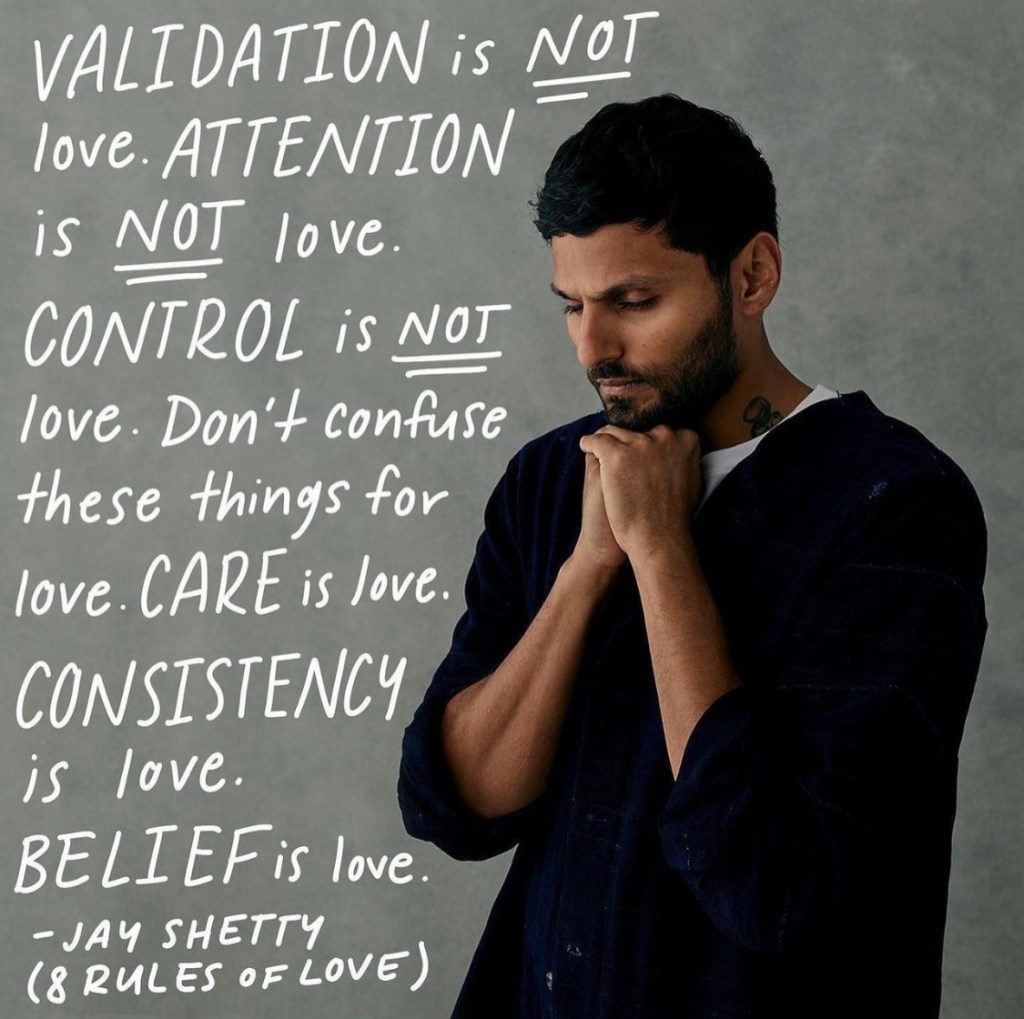
For example; girl has avoidant or abusive parent and grows up with an anxious attachment style. Girl grows up to meet boy who has an avoidant attachment style as a result of toxic patterns in his own childhood and they fall in “love’, but continue to perpetuate the unhealthy patterns of their youth because of this faulty programming.
This seems pretty accurate based upon what I have seen in the vast majority of my own patterns and those of people close to me.
The way that the parents and caregivers of our childhood “teach” us sets up our neurological processes for the rest of our life. I believe that most parents and caregivers are doing the best that they can, based upon what they have learned, themselves. But just because something is a learned behavior, it doesn’t mean it is a healthy behavior – and there are so many ways that parents can fuck their kids neurological programming up from an early age without realizing they are doing so.
There are also plenty of unhealthy parenting styles that are not necessarily “abuse”, (the “coach”, the micromanager, the “helicopter parent”, the “tuned out” parent, the “follow the rules” parent…the list goes on) but can still leave us with destructive behavioral patterns that can be incredibly hard to recognize, let alone change. And so the cycle repeats itself over and over, often for generations – until someone along the line becomes aware enough to say “enough”.
Parenting is quite possibly the most important “career” in the world yet we do not require any form of marriage or child rearing education before we start creating another generation. 😑
At some point in every relationship, the intensity begins to fade. Typically, it takes 18 months for the bodies’ elevated levels of oxytocin (the love hormone) to drop; a built-in chemical process that ensures (historically) that when we fall for someone, we will remain together for long enough to procreate.
As these chemicals begin to wear off, unfortunately, often so do the “blinders” that we put on in the first phases of infatuation and we may begin to be triggered by our partner. The way that we once seemed to relate on every subject becomes a task of how to relate on any subject. If the relationship is one that is built upon trauma bonds and both partners aren’t working on healing and growth – as well as maintaining comparability and connection – inevitably the relationship fails. Sometimes it takes many years of unhappiness for us to move on.
Sometimes those programs and belief systems are so ingrained that we never do.
We just suffer and assume that is what a “partnership” is.

But Babe. That is the furthest thing from the truth. We are meant to be happy, fulfilled and supported in our marriages, cohabitations or partnerships. Truly.
It doesn’t mean that our relationships won’t be challenging at times. A healing/healthy relationship requires a great deal of honest communication, empathy, respect, trust, and understanding and love/self love to work towards a healthier way of being, both together and individually. It requires making ourselves uncomfortable at times in order to give our partner what they need rather than what is familiar to us. It is finding ways to love each other that are a collaboration; a meeting in the middle, rather than running away or waiting for our partner to make the first move.
When we do find ourselves dysregulated or “triggered” by our partner, (or anyone, for that matter) if we can stop, take a few deep breaths and ask our minds and bodies “Why”, we can begin to access those deep wounds in order to begin to heal them. In order to heal it, we must feel it.
Conversely, if we don’t deal with our sh#t, we will just continue to remain a victim as we play out, over and over, the same rejection/abandonment/humiliation/betrayal/injustice wounds that we suffered as children. What we resist, persists.
Again, if both parties are not on the same page for growth and forward movement, (change is hard the brain does not like change.) the odds of a successful and happy future together are slim to none.
I recently posted a video short on my social media pages about “laziness” being the number one red flag to look for in a potential partner. It really hit home for me as historically, I have chosen partners who were incredibly unmotivated to grow or put in effort in nearly every aspect of the relationship. I chose these partners based upon my own unhealthy childhood patterns of needing to be the “caregiver” in a partnership in order to feel valued. This takes us back to that beginning statement about regret… Can you relate?

This is not only common sense advice, but there have been hundreds of studies done since the forties (and earlier) on relationship science and generally, they point to the same outcome of unhappiness or failure of a relationship when both parties aren’t doing the “work” to maintain a happy, healthy partnership.
I would recommend looking into some of the studies done at the Gottman Institute in Seattle. #@gottman.com Dr. John Gottman has been able to predict with nearly 94% accuracy whether a marriage will fail, based upon his “Four Horsemen” philosophy – Criticism, Contempt, Defensiveness, and Stonewalling. Dr. Andrew Huberman @hubermanlab.com has some excellent podcasts on increasing the success of partnerships and he also refers to the Gottmans as a go-to source for understanding.
But let’s cycle back to the main point of this letter. Healing our own trauma patterns in order to have successful relationships.
Once we have begun the healing work of accessing and re-programming old, dysfunctional programs and patterns, we must begin to create a new personal and relational identity based upon healthier ways of viewing ourselves and how we navigate in the world. We must embrace and live our new personal belief systems. We must become a mirror of the change that we want to see in ourselves, our relationships and our world at large; a reflection of our healing rather than our brokenness.
And that is a beautiful thing.❤️
Today and all days, much love and huge hugs.💖
– Terah


 This Blessed Sacred Life