Happy Enough

Let’s talk about relationships. Specifically, wanting to find a partner or companion to be in relationship with.

I love that we are living in a time when there is a tremendous amount of awareness around self-growth, healing past programs and patterns, and becoming fully authentic as individuals, rather than following a collective ideology or belief in who we “should” be.  I teach and promote this in my writing, and help clients to achieve greater levels of happiness and self-satisfaction through various therapeutic approaches.  I believe to “know thyself”  is the most important creed that we can live by.   

More specifically, perhaps that should be a three-part creed – 

  • Know Thyself; know who you are.  
  • Love Thyself; love and accept the beautiful, flawed, growing person that you are. 
  • Be Thyself; be authentic; in integrity with who you are.  

But I’ve noticed that in our desire to grow and evolve, we sometimes have a tendency to take things to an extreme –  we have developed this idea that we need to be “perfect”, especially when it comes to finding and maintaining relationships.   We are being taught that in order to attract the right partner, we have to exemplify all the things that we want to find in our mate – attractiveness, intelligence, kindness, abundance, good health, compassion, and most importantly, our level of happiness. In short, we need to be perfect. 

 I do believe that if we are committed to growth and authenticity, our baseline level of happiness is going to be a whole lot higher than someone who is stuck or stagnant; living a half-life.  But if we are aware, life, hopefully, is evolution rather than perfection. 

If we are in a state of evolution, we are never going to be perfectly healed.  Self awareness is a process of uncovering many, many layers of subconscious mindsets and belief systems.  It’s often when we think we have ourselves figured out that those systems rebel and we may feel like we take a backwards step.  But two steps forward and one back is still forward movement.  

We are never going to be in perfect shape, all the time.  We all have seasons when we might fall off the wagon of good health and exercise for a little while. That’s OK, as long as we eventually get back to caring for our temples as being the incredible vehicles of transportation through this life that they are.  If we don’t have good health, our ability to experience all that life has to offer will be limited. 

We will never be perfectly compassionate, loving, and kind – all of the time.  Like happiness, there can be contributing factors in our ability to be fully present and compassionate with others – Grief over the loss of a loved one, being in a season of necessary introspection, dealing with the myriad challenges and distractions of life, or just because we forgot to eat breakfast and are a little “hangry”. But going back to self-love and healing, if we are in a space of self-acceptance and compassion to ourselves, we are most typically going to be in that space for others, too.  

We are never going to be perfectly happy, all the time.  

There are so many factors that contribute or distract us from our happiness, but when we can come to a place of  loving and accepting ourselves as being beautiful, messy, growing creatures, we can be happy enough to find a partner who is the same.  

We can find someone who will be real with us; who will accept, love, and have grace for who we are at any given moment, knowing that sometimes humans are messy, challenging, and even difficult.  We can be accepted as we are because we are also beautiful, kind, loving, and growing.  We can give our partner the same grace, compassion and understanding, holding space for their own evolutionary process, even when it’s a little messy or uncomfortable.  

When you meet that person – a person – one of your soulmates; let the connection/relationship be what it is.  It may be five minutes, five hours, five days, five months, five years, or a lifetime.  Let it manifest itself the way it was meant to – it has an organic destiny.  This way, if it stays or it leaves, you will be softer.  From having been loved this authentically, souls come into, and return open.  They may sweep through your life for a myriad of reasons.  Let them be who and what they are meant to be. – Nayyirah Waheed

In fact, I believe it is vital for us to have healthy relationships to fully grow and heal. When we are authentic and vulnerable with our partner, we can provide for each other the necessary mirror to better see those blind spots in our personality that we may not be aware of. 

This doesn’t mean we should accept bad treatment in a relationship, of course.  If someone does not match you in treating them with value, respect, and dignity, and is not willing to do the work to heal the core wounds that cause that behavior, we need to take a big step back for our own mental wellness and safety.  It is never our responsibility to heal someone, but in a good relationship that is committed to growth, healing can absolutely happen, together.  It is important for our own self-worth that we have discernment as to what we are attracting and accepting.  

But  if you are in the  space of “I have to be perfect”… to attract the perfect partner… maybe give yourself – and your future mate – a little more wiggle room.  Perfection doesn’t exist.  Hold a little more lightness and space around the idea of who you are, and who you need to be to be in a relationship.  Bring some fun and some joy into the many possibilities that are out there.  You will find that when you create the energetic space of ease, of lightness and of joy around any idea, you also create space for what it is that you need and desire to rush in.✨

Big love💖

– Terah
Green Flags – Seeing the Good

I recently watched a YouTube video by relationship guru #JimmyKnowles from “Jimmy on Relationships” on the topic of “green flags” in people.  In the video, he gave what I felt was an incredibly insightful metaphor on focusing on people with positive traits rather than searching for the negative.  He gave a great metaphor to explain this, pertaining to “Currency Discriminators”.  Currency Discriminators are counterfeit money experts.  Apparently, they rarely spend much time looking at counterfeit bills.  Instead, they spend most of their time becoming so familiar with authentic currency that anything that is fake or false jumps out at them.  They learn what real looks like so they can easily spot a fake.  

Interesting, right?  And so apt for this particular subject. 

Looking for red lights in others seems to be pervasive in our current culture.  Anyone who spends time on social media or watching the news has heard of “toxic” or narcissistic behavior.  There are hundreds or thousands of podcasts, videos and memes that teach us what to look for in order to spot a narcissist or a toxic person. 

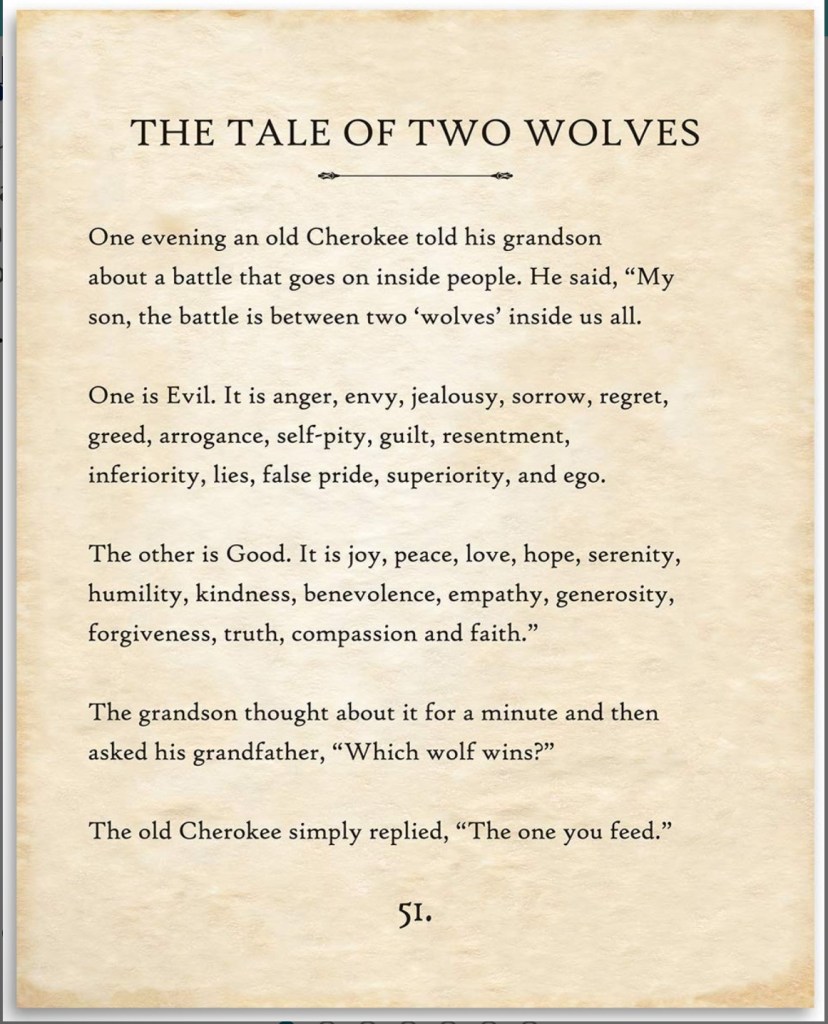
The problem is, if we are focusing on or dwelling on the darkness in others, it is impossible for us to be fully in the light, ourselves.  But, if instead of spending so much of our energetic currency looking for red flags in people, we put more focus on looking for and celebrating good people and the beauty and wonder of life in general, the toxic bullsh#t might just fade into the background.  Like feeding the good wolf rather than the evil one, the good that we feed will prevail. 

Where focus goes, energy flows…What we are, we attract.  We are the problem, and the solution. 

When we view the world (and ourselves) through the lens of love, the world begins to look back at us in the same way.  Focusing on the positive traits in ourselves and others brings more positive into our own lives. 

Here are some “Green Lights” to look for in those that we might be considering deepening relationships with.  When we get good at spotting authentic currency, it makes it easier to see and avoid the false and the unhealthy. 

  1. HonestyThey are honest in their word and deed.   Their actions reflect their words.  They have integrity between who they say they are and what they believe  – and how they behave.  Lying is a red flag for serious underlying issues, and a commitment to honesty is the best indicator for future success in relationships. If you can’t trust your partner everything else is pointless – or just won’t be there.
  2. Kindness –  You feel safe around them.  You can be vulnerable with each other.   They make you feel prioritized.  They are consistent.  You should never be confused about where you stand in relationships.  If they hold you in value, they will put in the effort – we prioritize what we value.  
  3. CommunicationThey communicate openly and honestly.  You can have hard conversations without them shutting down, running away or becoming hostile.  They can communicate their own discomfort with openness and vulnerability. 
  4. Humor/sense of fun –  They are able to hold life lightly.  They don’t take themselves or life too seriously.  They can joke and be silly without being rude.  Having a sense of humor is a huge green flag.  
  5. Open mindednessThey are flexible.  They are willing to approach the unfamiliar and can allow someone to hold a different view or perspective without dismissing or invalidating them.  
  6. AccountabilityThey have a “repair and rebuild” mentality.  They are able to acknowledge and apologize for their words or actions.  They say “I’m sorry” and genuinely mean it, even if they did not intend to cause pain or unhappiness.  
  7. EmpathyThey understand others’ pain.  They are curious about what makes others feel or what they think.   Empathy helps us to feel safe and loved. 
  8. VulnerabilityThey connect with themselves and others.  They can communicate how they feel openly and honestly. 
  9. PraiseThey celebrate others’ wins.   They can praise others without feeling shame, themselves. 
  10. Growth mindsetThey are self-aware.  They have an attitude of gratitude. They are curious about life and have an interest in learning about how to grow and evolve.  If we do not understand our own destructive or sabotaging patterns, we can neither grow or have compassion for others.  This is not about perfection, but a continued expansion into the best version of ourselves.  
  11. They see everyone as equal.   They treat others with value and care, understanding that our differences are our strengths, and our value lies in what makes us individually who we are.  Teamwork makes the dream work!
  12.  They have healthy relationships with othersThey hold healthy relationships with friends, co-workers and family.  They are able to openly display affection and care for those they spend time with.  They get along with a diverse group of people.

No one on the planet is “perfect”, of course. But when we seek out and focus on the good in others – and ourselves – we are creating a better world for everyone.  We teach our children and others to see the good to learn to better  be the good that we wish to create in the world.  

What positive traits do you look for and celebrate in others?

Big love.💖

  • Terah 

Unresolved Trauma and Healing Ourselves and our Relationships.❤️‍🩹

Confession time.

You might want to grab a cuppa and a comfy chair for this one because I’m going to go a little deep. 

Full disclaimer – if you have been in the abuse cycle in your own life and relationships, this post could be a little triggering. But understanding our cycles and recognizing familiar patterns in others is power and allows us to move into a healthier space both in our relationships and in our own minds and bodies.

To quote Aristotle, “Knowing yourself is the beginning of all wisdom.”

For anyone who has read my work or knows me as a human, you know that a huge part of my purpose here on this planet is to uplift, educate and enlighten, especially when it comes to understanding the science (and spirit) of how we each create our realities – and that it all starts with our thoughts.  I hate the term “Coach” and I am no one’s guru, but I have had a fundamental understanding of the mind’s ability to alter our lives since I was a child and have been studying it for most of my adult life.  

I am full-on geeked out, slightly-obsessed, so-excited – can’t-keep-still-have-to-share passionate about it.  I literally read about, listen to a podcast or take a class in some aspect of the subject nearly every single day.  For years.  It really is so freaking cool and lights me up like nothing else.  Well, not much else. 😏

The human mind is an incredibly complex system of organic programs that are largely formed in our early childhood.  This can be wonderful if we had a healthy, loving childhood but can really f#ck us up into adulthood and sometimes for the rest of our lives if our parents did not have the tools to give us a healthy beginning to life.  

We can overlay this circuitry even as adults (neuroplasticity) which is also super cool, but only if we are aware of those programs running our lives in the first place.  These subsets run every aspect of our lives from what information we take in (Reticular Activating System) to our happiness baseline and the amount of Dopamine, Serotonin, Oxytocin and Endorphins (happy brain chemicals) available to us – and conversely, the degree of adrenaline and cortisol (stress hormones) that are chronically cycling through our system, causing not only higher degrees of perceived stress but also inflammation and ultimately, disease.  (dis-ease) 

The problem is, most of us aren’t aware of these programs controlling our subconscious mind and affecting our everyday lives.  The way we perceive and navigate the world is just our “personality” (personal-reality) and we rarely go beyond that unless we have some sort of a come-to-God, radical wake-up call such as the passing of a close loved one or a NDE, ourselves.  

This largely-ignored circuitry also creates our attachment styles and the way that we approach relationships.  This is where my confession comes in.  

In spite of years of study of neurobiology, the mind-body connection, quantum physics and how it applies to our ability to create our personal reality – and a healthy dose of psychology, because I believe healing past trauma is the doorway to everything else – I have had a major blindspot or achilles heel in my personal life as a result of the relational patterning of a deeply abusive childhood – my personal relationships. If you can relate, you probably understand this perfectly. We tend to repeat the emotional patterns we learned as children.

For me, since I was a “pleaser/enabler” with abandonment issues and a healthy dose of “Fixer” syndrome, I was both avoidant and anxious in most of my closest relationships.  

As a result, I’ve experienced what you might call a smorgasbord of abusive personality types from my very first “real” intimate relationship; a physically beautiful, wealthy specimen of man that I met when I was barely 19 years old and living on the East Coast. The chemistry was instant and I thought I was in love. I was certainly starstruck. He swept me off my feet in every way possible. Including, after I had moved in with him, knocking me to the floor when he punched me in the face. I had grown up in a family of martial artists. I had begun “playing” karte with my dad, who is my Shihan (master) when I was quite young and studied under other teachers as a teen. Yet I could never fight back – because my circuitry says that I don’t hurt those that I love. I just allow it. I had been physically abused as a child, so there was a degree of “acceptance”as a result.

I eventually left him, fleeing (for my life) back to the Pacific Northwest where I avoided relationships for many years. I was not going to repeat that experience, ever. (Incidentally, I went on to earn six black belts, become a “Shihan”, myself, and have owned and operated a number of dojos since. I’ve also taught battered women’s groups and held many women’s self-defense classes; partially because I love it and it’s a family thing and partially as an aspect of my healing process from that experience).

I think it’s important to pause here to say that just as I was drawn to different forms of abusive relationships because of my lack of awareness of my own unhealed and dysfunctional relational patterns, I believe that those we become involved with are in exactly the same space, but usually from the opposite end of the spectrum.  

The man I was involved with on the East Coast committed suicide a couple of years after I left him.  I believe he hated himself for the damage he caused, but did not understand his neurological patterning to change the circuitry that created cycles of abuse.  

When we think about suicide, it is not the Self that we want to see die.  It is those parts of our personality/egoic constructs that are no longer serving our growth that need to go.  Recognizing this can be the difference between living a long and nappy life – or not.  

Which is exactly why I write this now. It is not easy to be deeply open and vulnerable to an audience, but how else will we ever change as a society to create better if we don’t start a dialogue about acknowledging and altering our own patterns?

This goes for our parents or caregivers, as well. I think most of the time, people are doing the best that they can to parent with the knowledge they have inherited, themselves. We can not hold ourselves as a victim and our parents or caregivers as the perpetrator into adulthood because that just keeps us stuck. We have to forgive, move forward and take accountability for changing our patterns.

That said, le’ts go back to my own “blind spots”.

I kept my word to myself, because we humans are learning creatures. I never allowed myself to be physically abused again. But because I had not healed all of my trauma and was still “stuck” in old programs, I found other ways to repeat the unhealthy relational patterning from childhood. Both my biological mother and the stepmother my father married when I was young were narcissistic personalities. I only received affection when I was “doing” or being good – behaving in whatever manner they needed on any given day, which was an ever-changing and complex thing. So I repeated that cycle with my next relationship. And the next.

I learned from these experiences and each relationship I tried was “better” (which is to say the unhealthy or toxic patterns became less obvious). But even now, though I seek only partners who are able to show affection and love deeply, I find myself drawn to “conflict avoidant” personality types who tend to mirror still-unresolved issues from my early life. We draw to us those people and experiences that best help us to learn and grow, even if those people and experiences don’t always feel great until we learn to recognize the pattern or growth opportunity.

But those “aha” moments where we see ourselves and gain self knowledge are powerful catalysts, so though it is not always easy and sometimes downright hard,  I continue to go into those dark closets of my subconscious mind to face my demons, unlock and alter those programs and circuits that keep me from living the fullest and most whole expression of who I am.

I keep seeking wisdom and understanding of myself and the world to continue to grow.

Beautiful friend, whoever you are and wherever you are, I hope you will, too. Because through awareness, self-knowledge, compassion and most of all, love, we will not only become more personally and relationally happy, but will build a healthier, stronger and longer-lasting brain and body, and gain an amazing sense of freedom and self-mastery.

And while we are at it, we just might change the world, too. 🥰

I’d say that is well worth the discomfort of acknowledging and vanquishing – or perhaps just coming to an agreement with – the skeletons in our closet and the monsters under the bed that we may have ignored out of survival or fear.  

What patterns have you been ignoring that you would like to see changed? 

So much love and huge hugs.💖💖💖

  • Terah