Excavating Our Authenticity: integration of lost Selves

Slot canyon of Paige, Arizona

In Paige, Arizona, just beneath the earth’s surface, there lay long, serpentine crevasses – “Slot Canyons”.  The unearthly experience of being in one of these canyons is like being on another planet; warm reds, browns, golds and even shades of purple coloring narrow stone corridors, sculpted over eons by wind and water to create a spectacular, otherworldly landscape like nothing else.  The journey we walk in this life is much like that canyon: sometimes long and winding, at times so narrow we have to hold our breath to squeeze through, but also at times opening to vast vistas so breathtaking, we could weep for gratitude.

The Swahili word for Journey is “Safari”.  To find your authentic self requires a true Safari; a journey to the self through the self.  This is a journey of spirit, on a spiritual path.  Along the way, you are likely to encounter fierce hunters and predators, wild thick jungles so dense you will need a sharp sword to get through.  You will have periods of darkness where you will wander, hands outstretched and ears wide open, unable to see the path in front of you but moving forward on faith that it is there and you are guided by unseen hands: you are.  

In this Safari of Self, be prepared for upheaval.  There will be moments of hunger as you begin to recognize dysfunctional and unhealthy patterns, as well as those things that your soul longs for.  There will be moments of thirst as understanding begins to tickle the edges of your mind and you want more.  There will be moments of loneliness as unhealthy patterns and associations drop away.

But when you have emerged from that jungle to arrive at the destination of Self; stronger, connected to those who resonate with who you truly are, feeling evolved and luminous – you will wonder that you ever hesitated to take the journey in the first place. 
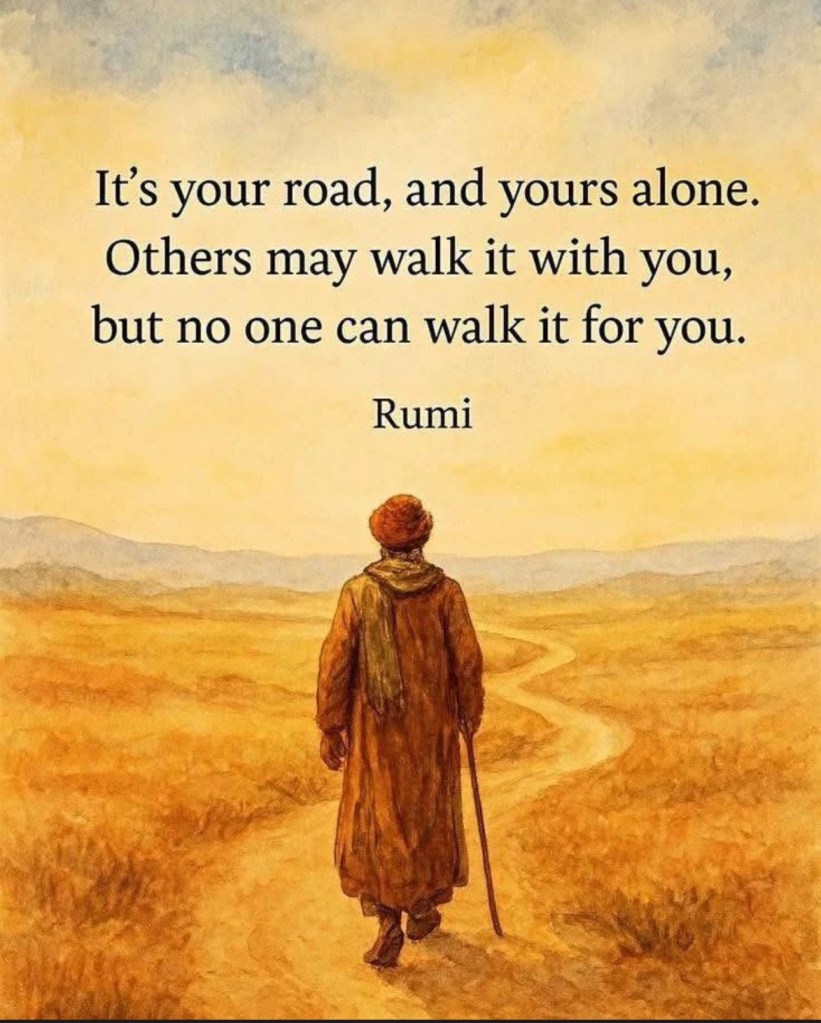
Rumi, a 13th-century Persian poet and Sufi mystic, observes that “The spiritual path wrecks the body and afterward restores it to health.  It destroys the house to unearth the treasure and with that treasure builds it better than before.”  Bon Voyage, loved one.

“Know Thyself” –  Maxim inscribed upon the Temple of Apollo, Delphi – Plato interpreted this philosophic maxim to mean “Know your soul.”  

Do you feel that you know your Self with a captital S – your soul?  Do you feel solid and whole in who you are, at your core?  

We are meant to be complex, multi-dimensional beings.  When we are whole, we are our most authentic Self; in touch with our highest Self, we are in touch with our child-like nature – our curiosity, sense of fun, possibility, and adventure.  We are able to enjoy pleasure like an embodied, divine being, but also to take radical responsibility for the creation of our lives; to sit down and get sh#t done when it is necessary, like a grown-ass man or woman.  But being integrated isn’t always natural or easy.

Recently, I enjoyed an evening out with one of my oldest friends.  You know those friends that you love on first sight, and know that regardless of time or distance, you just know that you will be friends for life?  She’s one of those.  🥰  We were discussing who we were as kids compared to now.  Once upon a time, she was a badass gangsta with a gorgeous, wicked temper and a propensity to put the hurt on anyone who so much as looked at her beautiful self the wrong way, but now, as an adult working mom she felt she had to become “tame” and as a result, boring. She said she occasionally felt a stirring of that girl inside her, but suppressed that aspect of her Self because she felt that part of her personality would have a negative impact on her personal and professional life.

She had made her career and children her priority, and had stopped living fully or authentically.  She had a wonderful relationship with her kids, but felt limited socially.   She lost her ability to have fun.  She became anxious and disempowered, and badly wanted to reclaim those parts of herself that allowed her to feel a deep sense of joy and satisfaction of life.

I have many friends who feel this way; as though growing up means growing one dimensional.  They have lost their concept of being in touch with their “inner child”, their vulnerability, or their sensuality, because growing up means you have to be a responsible, reliable adult, right?  

As women, we especially need to hold a piece of ourselves as that badass gangsta warrior woman. 

Not an imbalance – she needs to be tempered with compassion, empathy, love and nurturing, but this part of ourselves is where we gain our strength, our power, and when necessary, that momma bear that could tear someone apart with a flick of a wrist if her cubs or loved ones were threatened.  This part of ourselves is also often associated with our sensuality, another piece of our Self that is often either suppressed or overindulged. 

We are meant to be sensual, sexual creatures – it is an aspect of our biology, after all, but that does not mean we have to overly sexualize ourselves to gain value from men, just as repressing the beauty and sexuality of who we are to be “taken seriously” is an imbalance of our authenticity. This imbalance can result in creating a life of loneliness or feeling less-than.  

“I did not lose myself all at once.  I rubbed out my face over the years washing away my pain, the same way carvings on stone are worn down by water.  – Amy Tan

Most of us are taught to suppress our “fullness” from a young age.  We begin to rub parts ourselves away because we want to feel accepted or loved.  We want to “fit in”.  This is perfectly natural, of course.  It is a vital aspect of our DNA to seek connection, companionship and even acceptance of those around us.  We are at our best when we have meaningful connection with others.  When we have loving, supportive partners, family, friends and community.   

The problem is, like my friend, in seeking that approval and acceptance, it can be too easy to go to one extreme of the spectrum of our personalities, closing the door to our complexity, to our ability to express ourselves, or even feel deeply. We become disempowered when we allow others to dictate who we are, though this often happens by degrees, without really even knowing that it is happening.  Has happened. 
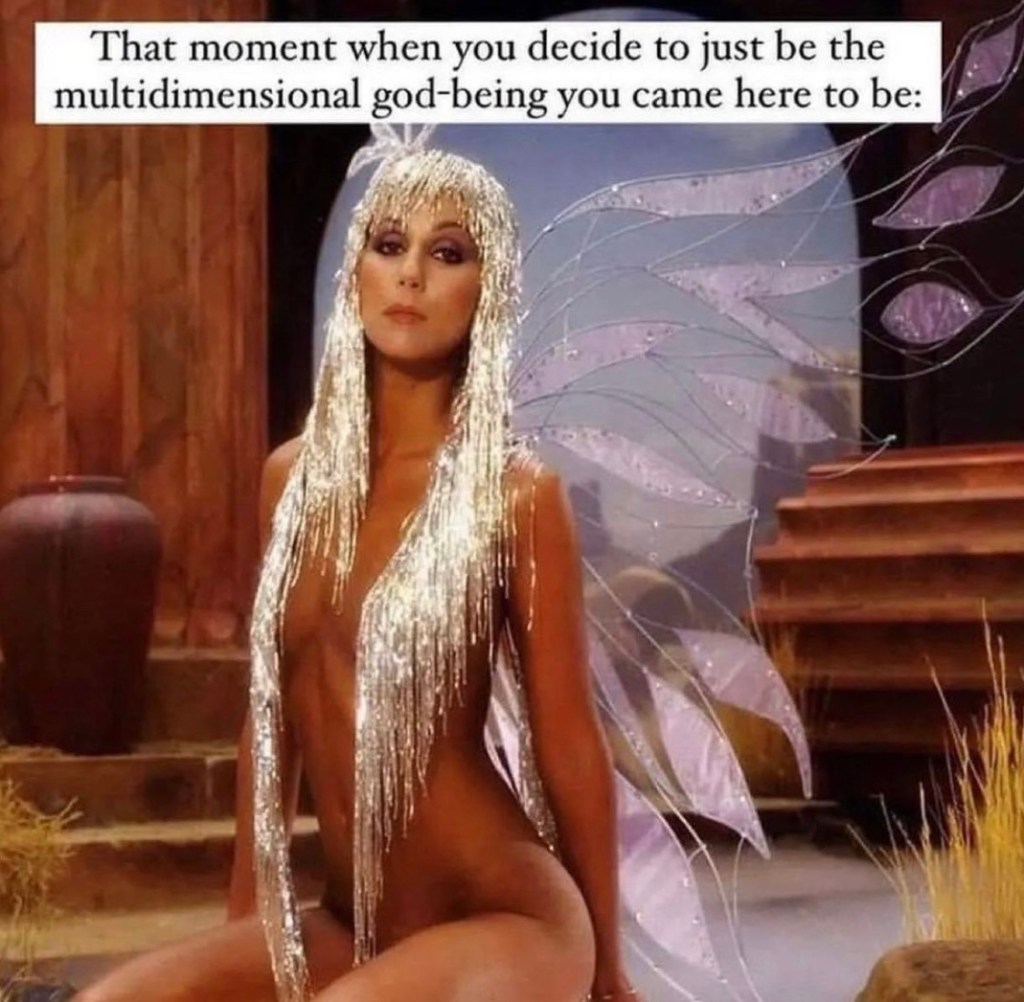
We are all glorious, multidimensional beings.✨

We become one-dimensional when we are meant to be multi-dimensional beings.  When we suppress parts of who we are, those parts are like children who are lacking love and attention.  They want to be acknowledged and integrated, and will do whatever it takes to receive the acknowledgment they need, but often in ways that impact us negatively.  Those subconscious parts of ourselves will act out in the form of regression, depression, isolation, dysregulation/overly emotional or angry responses, self-sabotage, or even unexpected violence.   We end up feeling overwhelmed or imbalanced.

Seek not outside of yourself; Heaven is within.  – Mary Lou Cook 

You are a gorgeous, multi-faceted individual who deserves to love every piece of who you are; mind, body and soul.  One of the most important aspects of feeling whole; of good mental health and happiness is acknowledging, embracing, and integrating every aspect of our Self.  We should have access to a sense of our inner child at various stages, our moody or mouthy teen, even the bright-eyed and curious college-age “kid” who we may have thought we grew out of decades ago.  

The following exercises can help you to access lost parts of yourself.  Many,  if not all will likely feel strange, uncomfortable, or emotional for a bit.  Stay with it.  I promise you will experience a shift that can be profound, if you do.  Most of us do not feel truly worthy of love, and part of this is because we spend so much of our lives rejecting those lost parts of ourselves. 

Inner Child Exercise: Find a photo of you as a child.  Hold that photo in your left hand and place your right hand on your heart.  Gaze at the photo, feel the connection between who you are now and who you were then.  Tell that child that you love her.  Do this daily, preferably when you wake and right before bed, when your mind is in a relaxed state.  (Theta brain wave)

Physical touch Exercise:  Give yourself a hug.  Say “Thank you, I love you.”  Stay in this position until you feel a sense of love and appreciation.  Alternatively, place one hand on your heart, one on your navel just below your belly button.  Close your eyes and repeat “Thank you, I love you.’  

Mirror Exercise:  Look at yourself in the mirror.  Really look.  Find three things that you like and admire about your face.  Say it aloud, then follow with –  “I love you.”  

Visual Affirmation Exercise: Write love notes to yourself such as “I love you.”  “You are beautiful/intelligent/worthy/capable, etc.” “I love the way we play.” Or I appreciate our curiosity/sensuality/childlike nature, etc.”  

Deep Inner Work Exercise:  Find a place to get quiet.  Come into your breath, spend some time just observing the slow inflow and outflow of breath from your lungs and nose.   When you feel quiet, ask yourself the question – what aspects of You have you repressed?  Who wants to be heard and have a conversation? 

When you have a sense of what part(s) of your Self need to have some attention, whether it is your inner child, your powerful warrior,  your sensual being, or any other aspect of personality that you may have ignored or suppressed, it is time to have a conversation.  Don’t be surprised if you feel some negative energy.  You may feel a little queasy, frightened, frustrated, angry – or a host of other emotions that we tend to keep under wraps, afraid to show who we really are.  Observe and allow whatever you are feeling to be, but hold that part of you as the calm in the storm.   

What you may need to say or experience to those lost parts of yourself is entirely personal, but once you begin to feel centered, a conversation might look something like this:  “Hello, my Love.  It has been too long.”  I have missed you.” “I am so very sorry that I ignored you for so long.”  “I love you.”   “I will never neglect you again.”  “Can we find a way to be fully integrated/together?”  Stay with that part of yourself until you do feel a sense of integration.  Be prepared to come back to this aspect of self regularly for a while – it takes time to heal a rift that may have been years in the making.  Plus, loving and accepting ourselves should be daily practice.  When you have come to the place where you feel those previously suppressed and forgotten parts of who you were once again as who you are, you will not only feel a deeper sense of wholeness and empowerment, but you will fall in love with yourself in a way that you may not have even known was possible.  And that is a beautiful thing. 
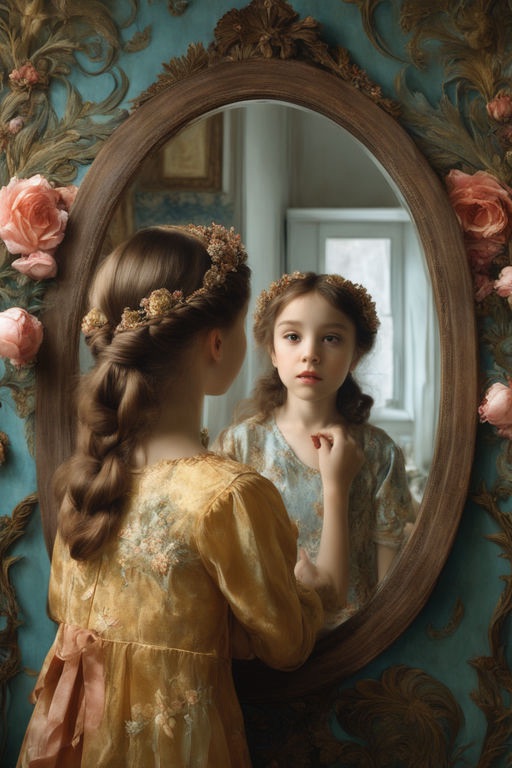
We must learn to accept and love each aspect of our history – and ourself.✨

Today, I hope that you will find time to pull the lid off of those parts of yourself that you have suppressed and repressed for too long.  Give them some love and attention, and gratitude for being vital aspects of yourself; of what has gotten you to where you are today, and begin working towards full integration.  Feel that beautiful complexity from your toes to your fingertips, and into the fullest expression of who you truly are.  You deserve it.

Big love. 💖

  • Terah

These Small Moments

Little moments of beauty and comfort…

I am currently reading #theatlasofhappiness by @mshelenrussell, a book detailing different customs of increasing happiness from around the world.

Loving the different ideas of what #happiness is from so many different cultural perspectives.  This morning’s chapter was from #finland 🇫🇮; my grandmother’s home country.  The Finns are a stoic people; having spent many centuries under the rule and thumb of other nations, they learned over generations to be more “survive” than “thrive”.  Their national version of happiness – #kalsarikännit – interpreted as “Drinking at home in your underwear with not intention of going out” 😆😆- isn’t exactly my personal ideal, but each to their own. 🤷‍♀️

As I sit here enjoying the fragrance of #lemon from my tea, the layers of color, texture, and comfort that I have built into my #nest , and the coziness of this moment, it occurs to me that there is no one “big idea” to define an overall sense of happiness in life. 

Lasting happiness is a series of small moments, such as the one I am in the experience of right now, that add up and compound upon each other to create a life of enduring and deep-rooted contentment. 

I believe that a large part of the reason that so many people have continued anxiety and depression is because we are always “doing”.  We are somewhere in the past or the future rather than just being right here, in appreciation of the moment. 

There is hard science to back this theory.🧑‍🔬

When we are fully present in each moment, especially when we take time to breathe deeply, our sympathetic nervous system (the excitatory system) switches to a parasympathetic nervous system (inhibitory/calming), reducing the stress hormones cortisol and adrenaline and increasing happiness hormones such as serotonin and dopamine, creating a greater sense of calm and well-being.  (Add a snuggle with your favorite person or a pet and you get a hit of oxytocin – the “connection hormone”, not only enhancing mood but also empathy, kindness and generosity.)   Over time and with practice, our baseline of happiness hormones and emotional resiliency increase, and stress hormones in the system decrease.  

What’s especially wonderful about this is that your higher levels of ease and contentment have amazing health and longevity benefits, such as lowering blood pressure, regulating blood sugar levels and metabolic function, lowering the risk of heart disease, and creating better cognitive function and neurological health.  

So if you are looking for a greater sense of overall contentment, ease, and joy in your life, look no further than the moment you’re in.  It’s true that some moments are better than others, but there is always something to be grateful for.  If we can find that appreciation and just rest and breathe in that space of gratitude, those moments will increase and and there will be a time when you realize that, in spite of the contrast that being a human on the planet earth brings, you are happy.🥰

How wonderful is that? 

Big love.💖

Joy and Sorrow – an Allegory

  Once upon a time, there were two sisters. Their names were Joy and Sorrow. Together they lived in a beautiful heart-shaped home, full of color and magic. Joy was the entertainer, loving to host lavish parties, spending time with family and friends, going on grand adventures around the world. For many years, Sorrow was more of a solitary sort; content to be the homebody, preferring to be working quietly in the garden or curled up on a comfy couch with a good book.  Naturally, tragedies were her favorite.

Joy was outgoing and ebullient, curious, childlike, and a hopeless romantic and flirt.  She loved to learn, to teach, to play, and to sing.  She loved to meet new people and spend time with her friends and family.  Romantic relationships were easy for her, but though she found a few long-term partnerships, she rarely held anything too tightly.  When something was ready to end, she accepted it, and the lessons she learned from these relationships, gracefully.  

They lived most of their lives in this way, Joy almost always at the forefront to welcome anyone who cared to visit, keeping the home a place of magic and happiness.  But in their early adulthood, there came a time when their grandmothers died.  Their grandmothers and an aunt were the only truly nurturing family the sisters had, and Joy did not know how to accept this devastating loss.  For nearly a year, Joy all but disappeared into Sorrows’ comforting arms. 

Over the years, the sisters would encounter other losses and occasionally, cousins such as grief, anger and resentment would show up on their doorstep, wishing to be entertained.   Joy learned that the key to happiness when these visitors came was to allow Sorrow to handle these encounters;  she was far more adept at managing difficult relatives.  When these relatives went back to their homes, having been honored as was necessary, Joy was able to come back into the fullness of herself and her home, having grand adventures, learning voraciously, flirting outrageously, and entertaining with ease, even through difficult times.

All the while, Life watched from a distance, sending these unwanted relatives and experiences to the sisters to help them to grow.  One day, he decided that he wanted to truly challenge the sisters. So he began to take people from their life that they loved deeply.  He first took their aunt, who had been the sister’s surrogate mother for much of their lives.  Next was the youngest of their two brothers, then their beloved pet, and finally, one of joy’s best friends. Through all of these trials, Joy held her space, allowing Sorrow to fill the home with her presence, even inviting Grief to stay for brief periods, but always found herself again with relative ease.  Life saw this, frowning, as he thought it impossible for her to continue to shine so brightly, even as tragedy after tragedy struck.  So he caused floods that destroyed parts of her property, took her favorite pets, some of her best friends, and even her career.  She and sorrow walked hand in hand through it all, yet somehow she continued to live up to her name. 

Life had nearly given up on his quest to challenge the sisters. He turned his back, intending to find other, more interesting experiences he could bring to people; but a realization struck him. There was only one thing the sisters had not experienced.  True love.  Romantic love.  A soulmate. 

You see, Sorrow had never been especially interested in relationships, and Joy held everything so lightly that, though she loved many people deeply, she didn’t really know that there was a deeper love that could happen between two unrelated people. She didn’t know that it was possible not just to love someone, but fall deeply in love with that person.  Joy loved science.  She loved to understand the mind, and knowing the structure and chemistry of the brain, the notion of a Soulmate did not fit into her understanding of the world. 

And so he sent her perfect match; Love.  The first time that they met, there was a clear chemistry and connection between them, inspiring her curiosity.  They began to spend time together, developing a friendship as they learned about each other during long walks, longer cups of coffee and glasses of wine, having meaningful conversations about myriad subjects that sparked Joy’s mind and filled her heart.   These encounters with Love evolved from a natural and easy friendship into something much deeper.   Joy experienced a connection with him that was so profound that it shocked her.  When they were together, her heart felt that it was Home.  It was natural in a way that she had never experienced before.  In a way that she did not know was possible.  The way it felt to kiss him, to dance with him, to sing with him, and just to be fully together, hearts connected, caused her to fall so deeply in love that parts of her soul peeled away just to be closer to him; to stay connected to him even when they were apart.  She knew that she wanted to share her heart-shaped home with Love.  That she wanted to share a life with him.  

But there were myriad complications to the relationship, and Love, as it turned out, had many other interests – and so they parted.  Joy’s mind accepted this as the best course of action, but soon, her heart caught up to the break, and the shock of the loss was so great that she lost herself.  She forgot her identity as Joy.  Sorrow held her, hoping to provide comfort as Joy took to her bed, burying herself deep beneath her down comforters.  Soon after, Grief came to stay, taking turns with Sorrow next to the mound of Joy-shaped blankets that refused to move, to eat, to sing, or even to breathe.  

 When it became apparent that Joy was no longer inhabiting her own body, Sorrow was forced to create a Joy-shaped mask, stepping into the role of her light-hearted sister, as well. It was Sorrow who pulled Joy, quiet and limp, along on parties, adventures, and even dates, hoping that some incredible experience would wake her sister up, but without Joy’s curiosity, interest and effervescence, the experiences felt empty.   

It was Sorrow who spent time with friends and family, masquerading as Joy when her sister could not be found in her nest of comforters; And Grief felt that much heavier for her sister being so deeply buried.  For over a year, Joy refused to inhabit more than the smallest space in the heart-shaped home. Eventually, Sorrow realized that she could not manage their life with just Grief to hold vigil, and their second cousin, Despair, came for a visit. 

Despair was intense; a small, dark creature who never spoke above a whisper.  Sorrow soon learned that she would need to lean in to hear whatever it was that Despair whispered, and it was then that Despair caught her, tied her to the bed next to Joy, and one by one, shuttered the windows that let the bright sunshine into their heart-shaped home.  Next, she began to blow out the candles that had been keeping the last of the shadows at bay, and the sisters were plunged into Darkness.  

For what felt like a lifetime, Sorrow lay in that darkness, hoping that Joy was still next to her, somewhere.  She missed her sister, missed her life and vitality.  She missed the sunshine that had filled their heart-shaped home, and in spite of everything, she missed Love.  She thought that perhaps this was to be their life – a life of Despair, a life without Love. 

But one day, a bright light shone beneath the door.  The light moved around the home, casting shadows on the floor as it peeked between shutters, knocking softly, at first, but soon began shaking the doors and windows, light playing wildly over the crystal chandeliers, dusty furniture and floorboards.  Despair shrank from the light, hiding in a far corner as the front door bursts open and Anger stood, backlit by the sun, frowning around the dark home.  One by one, the shutters on the windows flew open and the energy from Anger’s rage and frustration caused the dust and other small objects to whirl around the space.  

Despair fled the home in terror, and Anger burnt Sorrow’s bindings with one wrathful glance before striding over to where Joy still lay, deeply buried under thick feather ticks and woolen blankets.  One by one, he began to pull the covers from her shrunken body until she lay exposed and shivering on the bed. 

“Joy. How dare you abandon your home; your sacred temple.  Sorrow was never meant to be your caregiver; only your companion.  Just look at what your absence has wrought.”  Joy slowly sat upright, gazing around the dirty, dusty, dark home, and then over at Sorrow, still sitting on the bed next to her, wrists and ankles red and burned.   She pressed her lips tightly together, energy beginning to spark in her stomach before bringing her focus up to Anger.  

“Anger.  I do feel unhappy about the state of my home and my sister, but how could I possibly care for anything when the choices I have made have left me empty, in despair and guilt, and all for naught – I am still bereft of one of the most beautiful experiences of my life?  Love, in spite of all that I thought was between us, did not choose me. “. She looked down at her lap, wishing to crawl back into the safety of her nest, but she sniffed and glanced at her sister from the corner of her eyes. “Sorrow is better suited to this reality.”  Anger glared and folded his arms over his chest, clearly frustrated.  

  “Do not confuse one bad experience for reality. Love did not truly care for you.  He did not value you.  He did not give you his Heart, his communication, or even more than a tiny portion of his time.   Love was fickle with his feelings. How could anyone who loves Joy reject her?  I have a few choice words I’d like to share with him, if you would allow it.”  Sorrow scooted closer to Joy, wrapping her arms around her.  

“Do not listen to Anger.  Love was a product of his environment, just like everyone. He cared for you, but his choices had to be his own. We both know that. Being angry with him is natural, just as is being sad, because we lost something that felt so valuable.”  She turned to Anger.  “Anger, thank you.  Your rage over the pain this caused was what saved us from Despair, but you cannot stay here, and you certainly may not share your opinions with Love.  I’ll have a word with Temperance about future conversations, but for now, you should probably leave us to find our equilibrium.”  Anger rolled his eyes but bowed deeply and stepped out of the room.   Sorrow sat back, taking Joy’s hands in hers and looked deeply into her sister’s eyes.  

“Joy, we have to live this life together.  I don’t like wearing a Joy-shaped mask.  As you know, I don’t care for parties, and adventure just isn’t fun by myself. I can’t shoulder the burden of this life without you, so we have to figure out a way to share our heart-shaped home.  I’ll still handle the difficult experiences and relatives, if you can deal with all of the other stuff that you are way better at than I.  Please?”  Joy gave Sorrow a small, sad smile. 

“I can try, but Sorrow, my heart feels so much more empty than it did before I knew Love.  I had always been happy but with him, somehow I felt even more.  I felt complete.  The epitome of my name.  How can I be Joy if I feel this emptiness?  If I feel that I might never experience that again?”  Her eyes welled with tears, and Sorrow’s heart felt so very heavy that her beautiful sister had to feel such pain.  She pulled her hands gently from Joy, hoping that the lack of contact might ease her sadness a little.  Joy did seem to lighten, a little, and Sorrow felt a little lighter, herself.

“Well, remember neuroscience 101 – “Mood follows action.”…why don’t we start with finding things to fill that emptiness?  Things that you love, like cooking good food, going on adventures, taking long walks with the dogs, spending time in nature and with people that we love?”  Maybe we could even start writing and painting, again?”  Joy gave her sister a genuine smile; the first in a long, long time.  

“Why don’t we start with a walk?”  And so the sisters took a walk in the rain, hand in hand.  Life watched all of this, feeling pleased with himself and the sisters for learning from the painful experience, but also a little guilty for sending such a difficult lesson to the sisters. As they walked, he willed the skies to begin to clear and sent a rainbow so vibrant that Joy and Sorrow both stopped and stared in awe.  

Joy’s healing was not an overnight process.  There were still days when she refused to get out of bed, and Sorrow would find herself weeping over a sink of dishes, or on an outcropping overlooking the ocean when Joy suddenly took her absence, though she had been there only a moment before.  But each day, Joy would spend some time with her sister, listening to music, though she still could not sing, being in the moment, usually barefoot in nature, hugging a tree, or watching the wildlife that always seemed to be comfortable in their presence.  Even when she was fully present, Sorrow observed that her sister was softer.  The Joy that she had known was a little quieter.  Less balls-to-the-walls and more observant.  Sorrow wasn’t sure if this was a permanent aspect of her sister’s new personality or just part of the process, but she accepted it as it was.  

One evening, after returning from a long walk with their canine companions,  they were discussing how they would spend the rest of their night; reading a good book (not a tragedy) or re-watching “Bridgerton”.  Joy seemed undecided, looking towards their studio space before finally suggesting that they take out their paints again.  Sorrow gave her sister a hug, grabbed some pots of water and sat down to watch.  Joy raised one eyebrow.  

“Don’t you want to join me? I thought the last painting we created together using a palette knife was pretty interesting.”  Sorrow shook her head, remembering the painting they had been working on months ago; a representation of dead hope that she had put more of herself into than Joy.  

“No, I’m not really feeling it tonight.  I might step in occasionally, but I’ll let you take this one.  What are you thinking about creating?”  Joy smiled widely, picking up the phone and selecting “St. Finnikin” from their playlists.  As the music began, she stepped to the canvas and raised her charcoal, beginning to form shapes in wide, looping arcs.  

“I’ve got a vision of a Rockstar Angel in my head that needs to come to life.”  Sorrow sipped her tea, inhaling the aroma of rose and mint deeply, enjoying the feel of the moment.  She knew that finally, Joy was going to be ok.  Maybe even better than okay, judging by the content of the painting that was rapidly taking shape, bright pinks and deep, jeweled greens splashing across the canvas.  She stood up, stretching her tight back a bit. 

 “I think I might crawl into bed with a book, if you’re all good? There’s a Poe or Shakespeare that I think I’d like to dive into, but just give me a shout if you need me.”  Joy glanced back at her sister with a brilliant smile before turning back to the canvas, focus intent.  

“All good here!  Enjoy your tragedy, sister. “

Sorrow turned and walked back to her bedroom, crawling into bed with a deep sigh of relief.  She hoped that she and Joy would never go through an experience like that, ever again. If Love ever decided to come back into their life, she was going to meet him at the door and have a serious heart-to-heart about caring for and protecting her precious sister. If he could not agree to valuing them both, she would slam the door on his face, but not before giving him a black eye or two for good measure. It would seem, she mused as she opened the book on her lap, that perhaps a little bit of anger had rubbed off on her…but the thought was gone as quickly as it had come as she allowed herself to become absorbed into the story before her; “King Lear”.  She did love a good tragedy…

Did you know…that Grief and motivation run on the same neural circuitry pathways?  When we lose someone, something, or an idea that is deeply important to us, our mind wants to solve the “problem” of regaining what it is that is lost.  In the allegory, Joy loses her « soulmate », but the pain of grief can be from so many different types of losses.  

The inability to regain the person, thing, or idea is what causes our feelings of loss and sadness.  Dr. Andrew Huberman, neuroscientist extraordinaire, describes this phenomena aptly – “It’s like standing outside of a stone castle.  The thing you want is inside the castle, but you can not get past the gate, no matter how badly you want it.”  Eventually, you wander off to find another castle, but as you stand outside, you go through the stages of grief – 

Denial: I can get into the castle

Anger: Let me into the castle!!

I hate trite phrases like “This too shall pass”, though eventually, our hearts and minds really do heal, at least largely.  I believe that grief, like most experiences in life, are like packages that we carry with us.  When a major heartbreak or tragedy happens, that package may feel unbearable in its weight.  But time passes, and it gets lighter and lighter until eventually, we forget it is even there, until something happens to remind us.  We may feel sad again, for a spell, but even then, that pain is lighter.  Easier, and we get back to enjoying the beauty of life much more quickly.    I hope this happens for you, sooner rather than later.  You deserve to be happy, my friend.  Believe it. ✨

Bargaining: Please let me in.  I have cookies!

Depression: I’m never going to get in.  I might as well just lay here in misery.

Acceptance:  This person/thing/idea is gone.  I will likely always feel sadness about this, but I can find a way to live my life and maybe even be happy again. 

These stages don’t necessarily happen in exact order, all of the time.  We are unique individuals and the way we see and experience is also unique. But the gist is there.  In order to come to a place of healing and acceptance, we have to allow ourselves to experience each stage with love and grace, even when it feels hard.  We can mitigate some of this pain by doing things that we enjoy, spending time with good people, listening to feel-good music, talking out our feelings, and spending time in nature.  Mood really does follow action, when it comes to training our brain to feel good more often than not, and doing things that help us to feel better increases our vibrational resonance, creating an uplifting cycle.  

If you are still in one of the stages of your own grief, I feel you.  Truly.  My heart feels your pain, and I am so very sorry that you are in the experience right now.

Big love.💖

  • Terah

Green Flags – Seeing the Good

I recently watched a YouTube video by relationship guru #JimmyKnowles from “Jimmy on Relationships” on the topic of “green flags” in people.  In the video, he gave what I felt was an incredibly insightful metaphor on focusing on people with positive traits rather than searching for the negative.  He gave a great metaphor to explain this, pertaining to “Currency Discriminators”.  Currency Discriminators are counterfeit money experts.  Apparently, they rarely spend much time looking at counterfeit bills.  Instead, they spend most of their time becoming so familiar with authentic currency that anything that is fake or false jumps out at them.  They learn what real looks like so they can easily spot a fake.  

Interesting, right?  And so apt for this particular subject. 

Looking for red lights in others seems to be pervasive in our current culture.  Anyone who spends time on social media or watching the news has heard of “toxic” or narcissistic behavior.  There are hundreds or thousands of podcasts, videos and memes that teach us what to look for in order to spot a narcissist or a toxic person. 

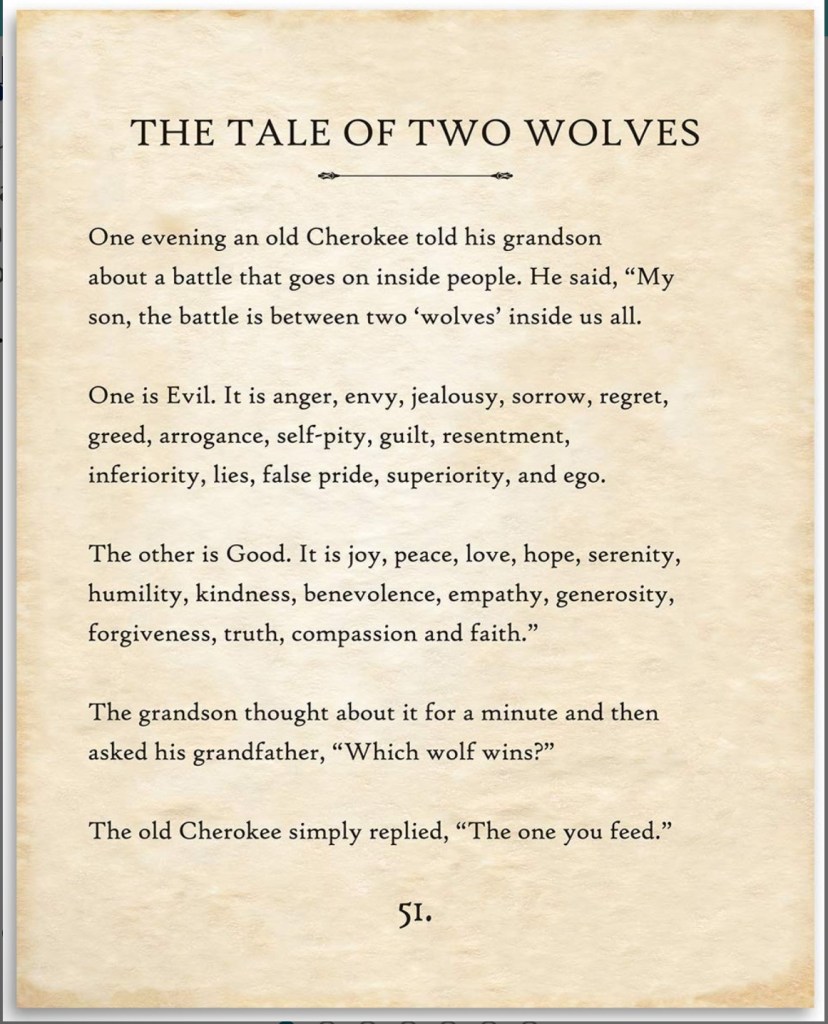
The problem is, if we are focusing on or dwelling on the darkness in others, it is impossible for us to be fully in the light, ourselves.  But, if instead of spending so much of our energetic currency looking for red flags in people, we put more focus on looking for and celebrating good people and the beauty and wonder of life in general, the toxic bullsh#t might just fade into the background.  Like feeding the good wolf rather than the evil one, the good that we feed will prevail. 

Where focus goes, energy flows…What we are, we attract.  We are the problem, and the solution. 

When we view the world (and ourselves) through the lens of love, the world begins to look back at us in the same way.  Focusing on the positive traits in ourselves and others brings more positive into our own lives. 

Here are some “Green Lights” to look for in those that we might be considering deepening relationships with.  When we get good at spotting authentic currency, it makes it easier to see and avoid the false and the unhealthy. 

  1. HonestyThey are honest in their word and deed.   Their actions reflect their words.  They have integrity between who they say they are and what they believe  – and how they behave.  Lying is a red flag for serious underlying issues, and a commitment to honesty is the best indicator for future success in relationships. If you can’t trust your partner everything else is pointless – or just won’t be there.
  2. Kindness –  You feel safe around them.  You can be vulnerable with each other.   They make you feel prioritized.  They are consistent.  You should never be confused about where you stand in relationships.  If they hold you in value, they will put in the effort – we prioritize what we value.  
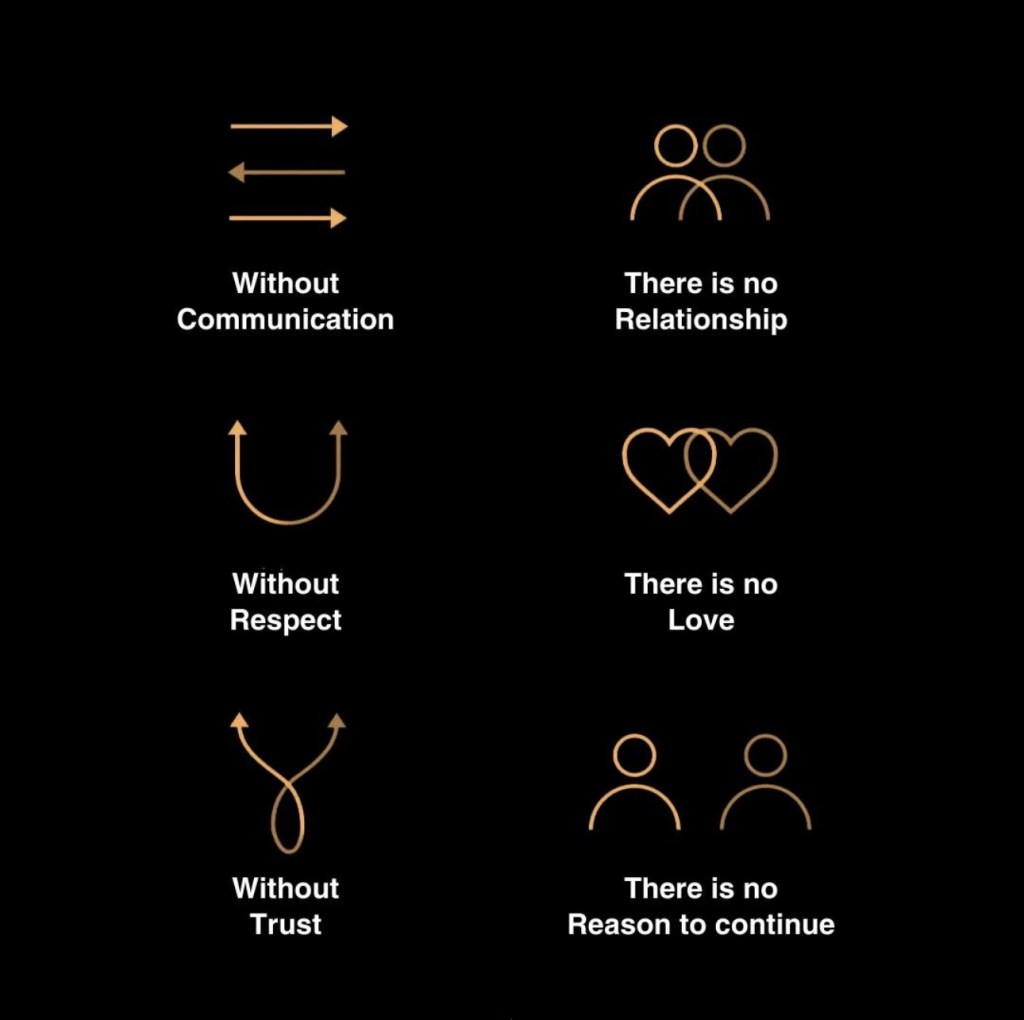
  3. CommunicationThey communicate openly and honestly.  You can have hard conversations without them shutting down, running away or becoming hostile.  They can communicate their own discomfort with openness and vulnerability. 
  4. Humor/sense of fun –  They are able to hold life lightly.  They don’t take themselves or life too seriously.  They can joke and be silly without being rude.  Having a sense of humor is a huge green flag.  
  5. Open mindednessThey are flexible.  They are willing to approach the unfamiliar and can allow someone to hold a different view or perspective without dismissing or invalidating them.  
  6. AccountabilityThey have a “repair and rebuild” mentality.  They are able to acknowledge and apologize for their words or actions.  They say “I’m sorry” and genuinely mean it, even if they did not intend to cause pain or unhappiness.  
  7. EmpathyThey understand others’ pain.  They are curious about what makes others feel or what they think.   Empathy helps us to feel safe and loved. 
  8. VulnerabilityThey connect with themselves and others.  They can communicate how they feel openly and honestly. 
  9. PraiseThey celebrate others’ wins.   They can praise others without feeling shame, themselves. 
  10. Growth mindsetThey are self-aware.  They have an attitude of gratitude. They are curious about life and have an interest in learning about how to grow and evolve.  If we do not understand our own destructive or sabotaging patterns, we can neither grow or have compassion for others.  This is not about perfection, but a continued expansion into the best version of ourselves.  
  11. They see everyone as equal.   They treat others with value and care, understanding that our differences are our strengths, and our value lies in what makes us individually who we are.  Teamwork makes the dream work!
  12.  They have healthy relationships with othersThey hold healthy relationships with friends, co-workers and family.  They are able to openly display affection and care for those they spend time with.  They get along with a diverse group of people.

No one on the planet is “perfect”, of course. But when we seek out and focus on the good in others – and ourselves – we are creating a better world for everyone.  We teach our children and others to see the good to learn to better  be the good that we wish to create in the world.  

What positive traits do you look for and celebrate in others?

Big love.💖

  • Terah 

Reincarnation Reevaluation

It is estimated that just over half the world believes in reincarnation. Buddhists, Hindus, Sikhs, and Jainists all believe that our souls are eternal and keep incarnating in new bodies after we shed the previous skin of a lifetime.  In fact, up to 25% of Christians believe it, as well.  I found it interesting to learn that many philosophers, such as Pythagoras, Plato, and Socrates, also believed in the continued rebirth of the soul.  

From a quantum physics standpoint, energy cannot “die”, but must be transferred or transformed.  A tree becomes a log that is put into a fire to become a flame, to become ash, to become earth, to once again become a tree…

In spite of my own very traditional Christian upbringing, I’ve had a few experiences that have led me to believe that I’ve been around the proverbial block a few times now, too.  I like to think of each lifetime as a school. When we’re a young soul, we get to go to kindergarten and life is pretty easy. We don’t think terribly deeply, and we’re mostly here for a good time, even though we are still learning simple lessons.  

 As we progress through lifetimes/grade levels, things get a little harder, but I think that’s by choice. That maybe before we are born, we choose the classes that we are going to take to best help us grow; to evolve and become Creators in our own right. By the time we’re in “university”, many of us are choosing some really f#cking hard life lessons so that we can achieve exponential growth.  

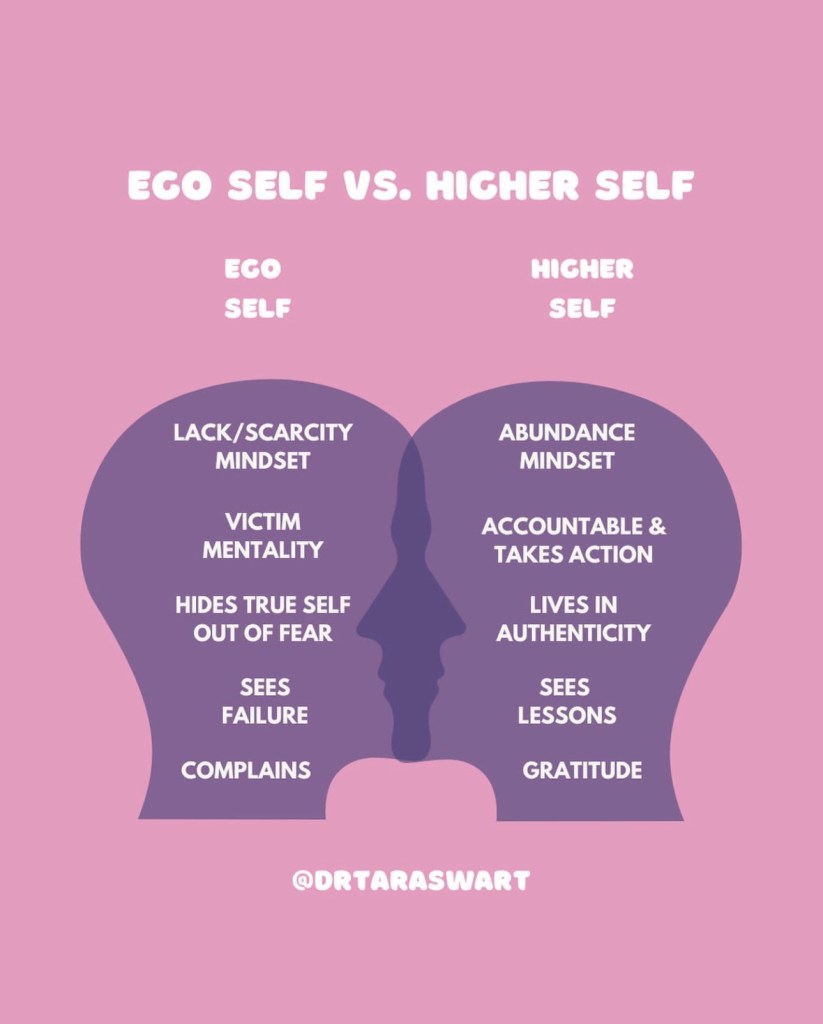
I don’t know that we all pass every class that we take. Sometimes, we get stuck in victim mentality, or we get drawn into materialism, or those hard lessons cause us to become embittered rather than more compassionate.  Sometimes when we are given the opportunity for growth we allow fear to rule us and we stay stuck rather than advancing.  

Eventually, we shed our mortal coil and we get to go again, perhaps with some encoded memory that we’ve been here before, and hopefully do it a little better next time.  

But over the past couple of years, I’ve started to think that maybe I should be a little more global in my belief system when it comes to reincarnation.  I’m not so sure that it always has to mean that we literally die, go to some other place for reassignment and then come back as another person. 

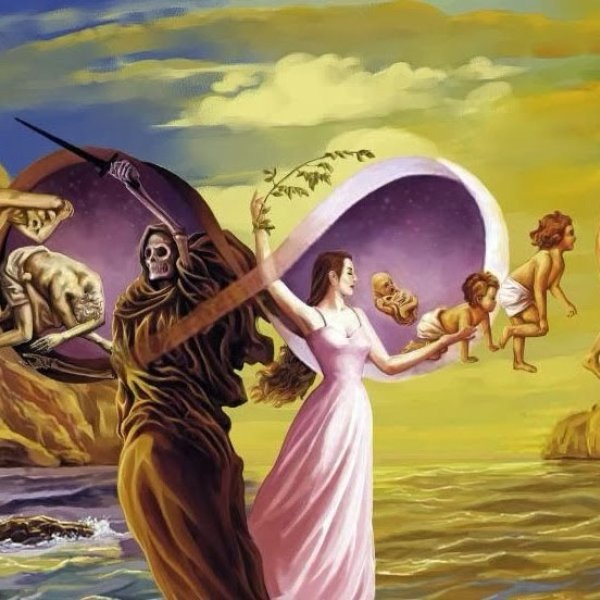
I think maybe we also reincarnate many times, in one lifetime.  The death may be more metaphoric than literal, but we’ve all been through many experiences where we felt like some part of us died, as with the death of or separation from someone or something (such as a career) we love, or perhaps it is the “death” of some aspect of our identity or ego that we have carried from childhood. In fact, it is said that when someone consider suicide, it is not the whole self that wants to die, but rather some aspect of the ego that long ago stopped serving us.

When we go through these “little deaths”, we may feel that we are in purgatory for a time, and it can be months, or even years before we begin to crawl out of the protective cocoon we have built for ourselves, to learn to fly again. To be reborn, each time a little – or a lot –  of a different person.  

I’ve had a number of such experiences throughout my life; usually following some really frickin’ hard lessons.  I have been through some of these over the past three years or so, but recently found myself in a situation that caused acute emotional pain; asking the question – “WTAF Universe (Unified Field/Source/God/Jah/whatever works for you); this totally sucks.  Why am I getting this lesson AGAIN?  

To be immediately followed with “oh.”  

Because I didn’t learn the first time.  If we fail a test in a particular class in school, if we are lucky and our instructor/teacher/professor takes mercy on us, we can re-take that test. I believe the Universe is infinitely merciful and so we get to take the test over. And sometimes, over, and over…and hopefully, eventually we figure it out. We have our “oh” or “aha” moment.

So the question, when we find ourselves in the same lesson, must be:  “What did I need to learn here?”  Sometimes, with those BIG lessons, it takes a bit of deep work to figure it out.  We have to look at and work through the source of the thought processes that are creating or drawing to us these challenging experiences.  But  as soon as we realize what the lesson was all along, there is this amazing feeling of “aha”, and a knowledge that we just moved up a level.  We shed the heaviness that was connected to what we were holding, and remember that we have wings again.  We re-incarnate, lighter, happier, and excited for the future.  

Of course, there will always be many other lessons to learn, but that particular class is passed, and past.  

What’s especially exciting about the idea of multiple reincarnations within each lifetime; whether they are related to relationships, lack/poverty thinking, victim mentality, low self-value/self love or any other issue or program that has been carried from a flawed or traumatic childhood, is that just like being born into a new body with a new family, many of the old, unhealthy habits and people that were an aspect of that life and vibrational resonance drop away and healthier, happier habits and communities are formed. 

 We learn to set healthy boundaries and care for ourselves better.  New opportunities show up.  We become more deliberate in the creation of our personal reality.  As an additional bonus, being a little further along the path enables us to guide and help others create a happier reality for themselves, too.  We are ripples on a pond, contributing in our own way to the evolution of humanity.  

How cool is that?😎

Have you had this experience?  Have you felt like you have lived many lives in this lifetime?  I’d love to see your stories!

Big love.💖

– Terah

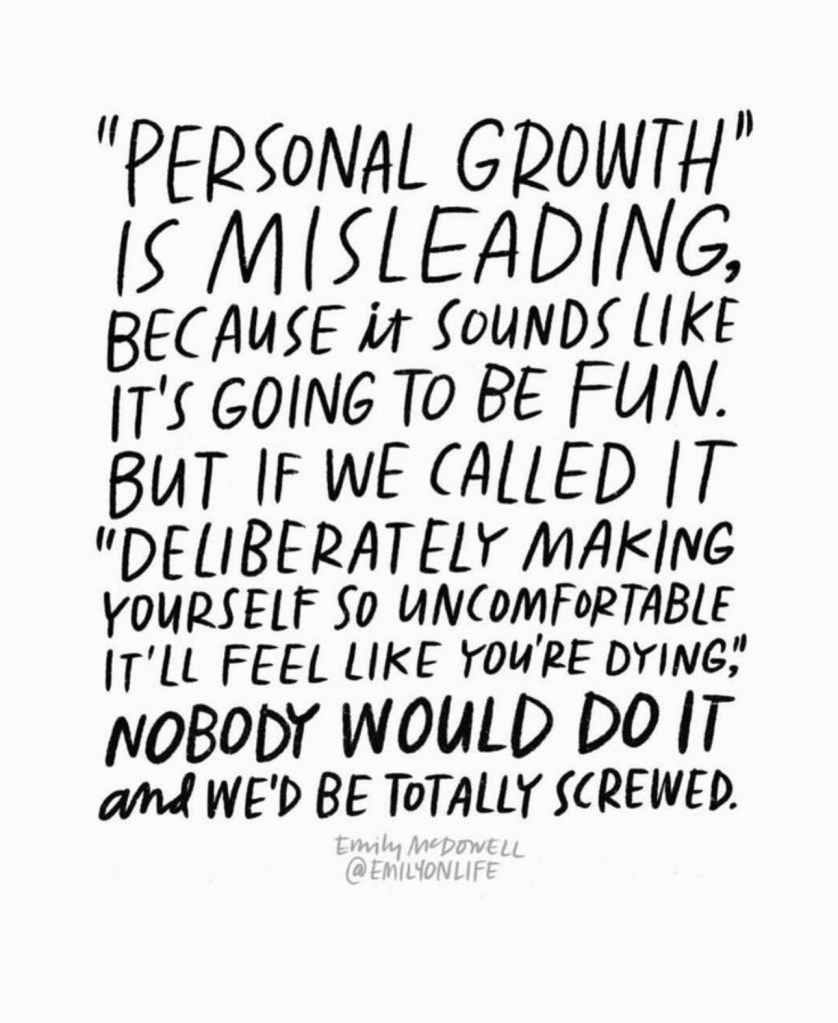
Honoring the Pain in the Process – self growth is f#cking hard!

Evolution ain’t easy…🥶

Let’s start this conversation. Growth is f#cking hard. Painful, in ways.

It can be depressing and overwhelming, initially.  

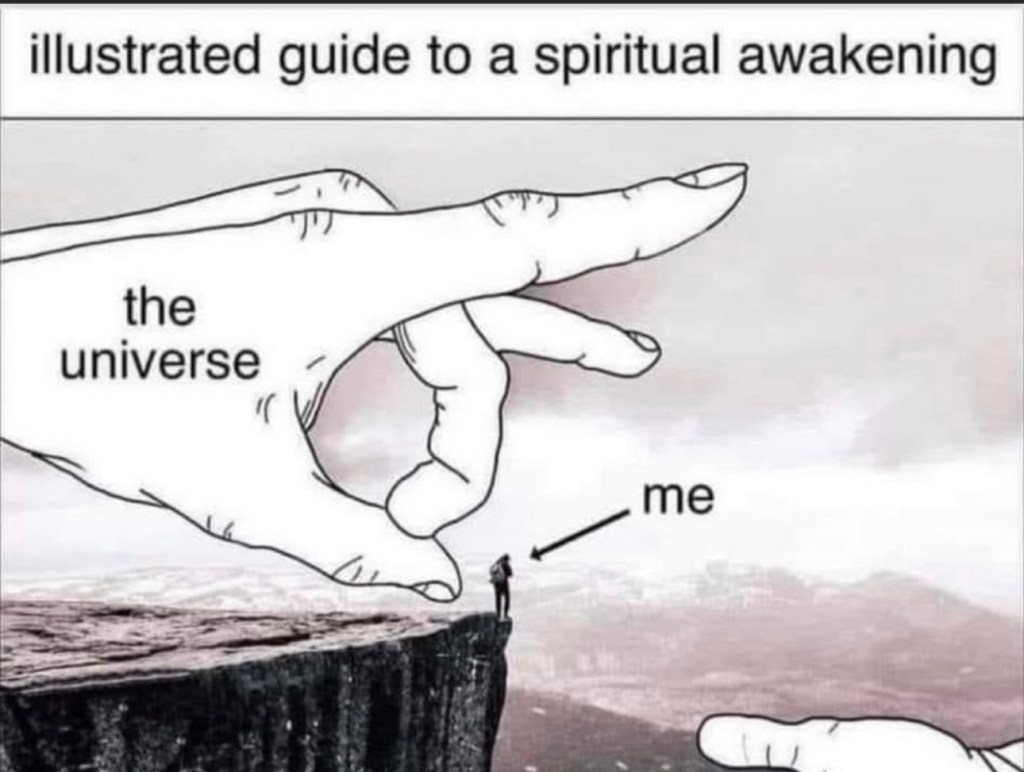
It may lead to rainbows and unicorns, but know this to be true – we often have to leave the familiar, the Known, and even those people and places that we still love in order to find our path towards peace and freedom.  

That path isn’t easy, either.  I read recently that it is estimated that only 2% of the population choose growth.  This is largely because our primitive brain has not evolved to understand the positive aspects of growth.  

The primitive, or downstairs brain (limbic region and amygdala) has not really evolved in thousands of years, and keeps us “safe” from anything that could potentially be harmful. To the amydala, the unfamiliar is unsafe. The primitive brain tells us to stick to the familiar. The safe. It tells us that we should stay in the cave, and tries to override change by creating neurochemicals that make us feel deeply uncomfortable and even fearful of anything that seems unfamiliar.

It is understandable to want to stay in a place of perceived safety, even if that safety makes us deeply unhappy.

Because sometimes, the path to peace downright sucks. Before we can find joy, the path winds through dark forests and up steep mountains. There will be times when we feel lost. There will be times that we feel we are in darkness, and all that we can see is the step directly in front of us.

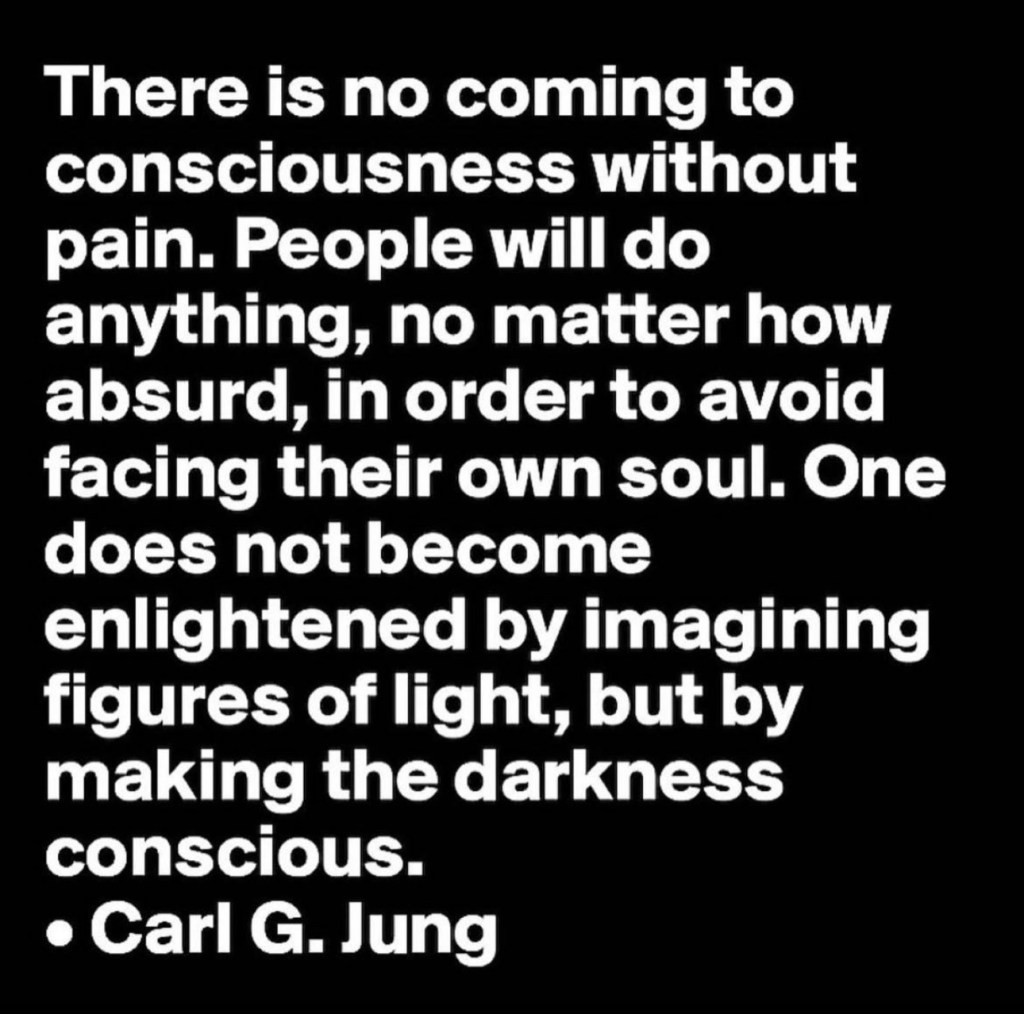
We will have to confront those dark parts of ourselves – the skeletons in our closets and monsters under the bed – past trauma, dysfunctional patterns and programs – that we may have avoided our entire lives before. We may endure times of aloneness and even loneliness as we make our way on our very individual path.

We will lose people along the way; those that can not accept the new version of ourselves; or just can’t make the journey.  

It’s hard, and sad, even heartbreaking, sometimes.  

But we also gain new friends and family that more accurately reflect the reality that we consciously choose to live, rather than one that was chosen for us.  Our vibe finds our tribe.🥰

Most importantly, we gain peace in knowing that we have chosen our own path.

Time to fly, babe…

Eventually, that decision will become the best decision we have ever made for ourselves. Our journey through those dark paths leads to bright sunshine and warm seashores. The dense woods become charming paths leading through bright glades and mirror-still pools as our mind’s new programs learn to create new realities.

Even in this upgraded reality, there will still be days that clouds move across the path and feel hard or sad. We may mourn for that which we left behind.

But it is 💯 worth it. I can not overstate that enough.

It is worth every drop of discomfort, every leap into loneliness, every disconcerting, uncomfortable or downright scary experience with those lost parts of ourselves and the hard process of stripping away of old, outdated was of thinking and being.

It is worth the pain. The “fertilizer”, to live a life of freedom as a conscious creator rather than as a slave to the programs and patterns instilled upon us by our parents, caregivers, peers and societal expectations.

If you need evidence of this, look to any human who has begun to live by this new shift in paradigm.  I challenge you to find one person who would go back to the Matrix of our own implanted b.s. 

But it’s still f#king hard. 😖

Did you know that when a caterpillar creates its cocoon, it doesn’t just sprout wings and fly away – it completely dissolves into a black miasma within that cocoon before Re-forming as the beautiful symbol of transformation we all recognize and most of us love? Growth and evolution is much like this.🥶🦋

It may feel like we go through our own period of hibernation and re-forming as we spend more time in “being” and self-examination and less time in “doing”.  

This is also a necessary part of the process.  Just as the caterpillar must quietly dissolve in its cocoon to become something more, we also have to become still and go inside of ourselves in order to dismantle all those faulty and outgrown belief systems.  It may feel like winter.  

There was a study done in which scientists injected Redwood trees with a chemical similar to adrenaline in order to prevent the trees from hibernating over winter.  Every single one of these normally long-living trees died within the year.   

Humans have times when we must metaphorically hibernate, as well, if we are to grow into a new season of flowers and warmth.  

Even having that big-picture understanding that the short term, hard changes will eventually lead to long-term happiness, the process is still hard. So it is important to acknowledge and honor the discomfort and sometimes even pain that happens when we start this journey towards peace.

If you are on this journey, I honor you. I acknowledge the pain you may be going through as those old egoic patterns begin to fall away. As you deconstruct.

If you need support or a shoulder on your journey, know that you are surrounded by love and there are others that will find you on the path.❤️. I am one of them, and am sending huge hugs, care and encouragement along the way.

Big love.💖

– Terah

Protecting your Peace/Ho’oponopono

To an emotionally unhealthy person, clear boundaries or a “no” is either a challenge or a personal affront.  

To someone who is whole or on their healing journey, there is no possibility for affront.  Choosing to listen to one’s own needs instead of people pleasing is a mark of self-respect and value.  

We must nourish ourselves before we can feed others…

Babe. Grab a cuppa and a comfy chair because we are going to take a little dive into a number of subjects today that all tie together, eventually. But the overarching theme here – and this is so important – is this:

You have a right and a responsibility to protect your peace.  

This may seem like a no-brainer to some, but it is a radical concept to others who might be accustomed to being the peacemaker in family and peer dynamics – rather than the peace holder.

Protecting your peace means it’s not only ok, but vital that we learn to set healthy boundaries for ourselves, our time, and our energetic resources.  It is making sure we find time for self-care and learning what it is that makes us as individuals happy. 

Because Goddess knows, it can be only too easy to lose ourselves in the interests and lives of our partners, peers, and parents. And of course, our children, if we have them.

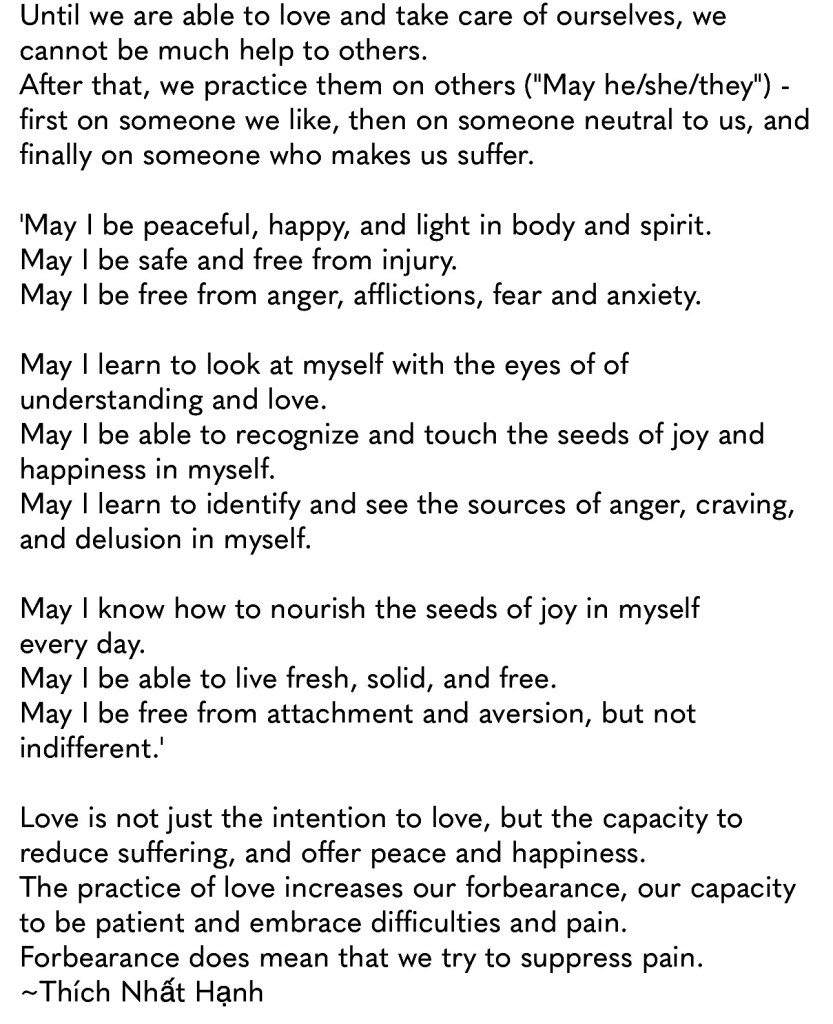
“Until we are able to love and take care of ourselves, we cannot be much help to others.”

This doesn’t mean that we should not care for and share interests and passions with those close to us, of course.  Loving those around us makes everyone’s lives better, and common ground is the best place to find healthy, happy connection, right?  But finding a sense of authenticity and joy in our lives requires finding the balance between loving ourselves and others.  

I like to imagine our bodies, minds, and the magnetic field that surrounds us as an energy storehouse.  When we are in balance with ourselves and the world around us – happy with ourselves, our partnerships, family dynamics, social groups, and career or purpose, our energy levels are full.  Light. We feel easy in the world and are able to share some of that stored energy with those around us.  

But it can also be too easy to get caught up in the drama of someone else’s toxic mentality – and we have absolutely no obligation to invest our time and headspace into energy vampires – people or things that draw from our energy accounts without any promise of return.  

This can be so hard for those of us who are empaths, people pleasers or fixer/mediator type personalities.

Here’s where an interesting concept comes in – Have you heard of the ancient Hawaiian practice of Ho’ oponopono? 

The word translates into English as “Correction”, but also contains the synonyms “manage” or “supervise”.  The practice, often facilitated by a family elder or a Hawaiian Hapuna – healer/priest – is one of healing, reconciliation, forgiveness and love, often within a family or extended family, but extending to anyone who breaks Kapu, or spiritual laws.  Often, when a member of the community became ill, a Hapuna would be consulted to help the person become healthy again through finding forgiveness from the Gods or the person with whom there may have been a dispute.  

The practice of Ho’oponopono consists of four simple phrases – 

~ I’m sorry.

~ Please forgive me. 

~ Thank you. 

~ I love you.

Ho’oponopono is taking responsibility for one’s thoughts or actions, making amends through word or deed, giving gratitude and love to the situation or person we may have wronged. This is a beautifully powerful practice and I believe we can take this idea and practice into every aspect of our lives to create greater unity and wholeness within ourselves, our relationships, and the world around us.

The thing is, apologies and vulnerable communication can be so hard.  

Often, our past (childhood) programming translates the need for an apology or regular, honest communication from someone as “I must be bad/wrong/unloveable”, etc.  This is rarely if ever the case, of course, but remember that an estimated 98% of our daily thoughts and actions are acted from our subconscious, (ego) and most of that began in the first eight years of life. 

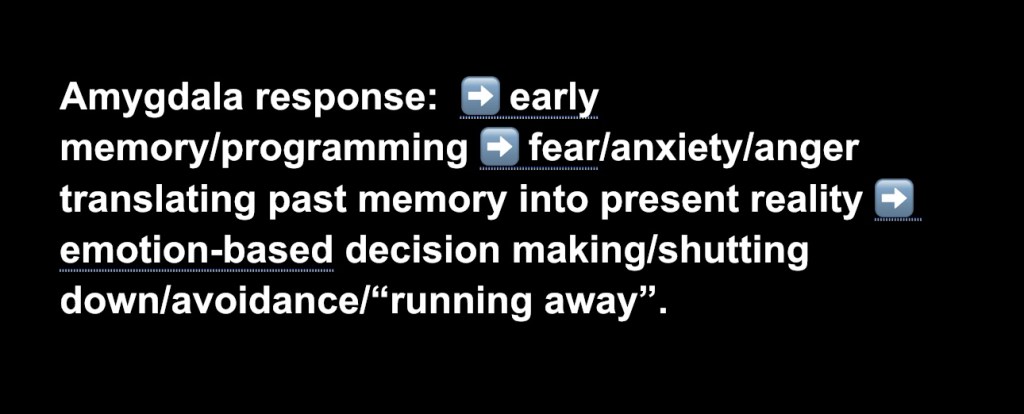
Our conscious mind may not understand or even care to query as to why it is difficult to say “I am sorry” or communicate without feeling defensive, frightened or intimidated. When we are acting from past trauma or unhealthy patterns, the amygdala – the brain’s processor for emotional responses, decision making, – and emotional response – is triggered, causing us to go into a state of anxiety, anger or fear. This is a primitive, emotional survival-instinct based reaction.

Amygdala “ reaction” Vs. Pre-frontal cortex “response” – If it’s histrionic (emotion-based) it’s history-based.

It requires some deep self-exploration and conscious awareness to find the root of our behaviors.  Frankly, I don’t believe we can fully do this until we confront the faulty belief systems that our parents, caregivers and peers implanted in our minds from an early age (lack of value/unworthiness.  Abandonment.  Fear-based thinking/survival.  Disempowerment. The list goes on…) 

This is where the concept of Ho’oponopono related to the self can be applied to assist in the reprogramming and healing process.  When we begin to practice having curiosity about how our internal states are reflected in our outside world on a regular basis, we can begin to address those unhealthy and untrue patterns and programmed ways of thinking.

We can learn to love ourselves in the way that our earliest caregivers perhaps did not know how to. We can forgive ourselves for our past to move forward in a manner based on a healthier EQ, have gratitude and appreciation for who we are in the present moment. All of this establishes the habit of growing the neural network of response from the prefrontal cortex; the part of the brain linked to higher-order functions such as logic, empathy, care and altruism. We learn to be in a place of responding rather than reacting. We learn to validate others’ feelings and take accountability for our own words and behaviors that might sometimes be less than constructive or healthy for ourselves or those around us.

@drtstaswart 😎

The process of healing and learning to be aware and take accountability for every aspect of who we are in the present is not easy, as I mentioned above. I began learning about psychology, trauma, and eventually neurobiology and quantum physics/vibrational realities decades ago -not to help others, but to learn to heal myself and my own childhood trauma.

It’s amazing to me how even now, I occasionally discover layers of early dysfunctional programming and behaviors that I had absolutely no idea were there, particularly around my value system in my most intimate relationships.

But as hard and sometimes frightening as this learning and growth is, it can also be exciting, as I have spoken of in past posts and blogs relating to neurochemistry and confronting discomfort eventually giving us an emotional “high”. (#intothechaos) I don’t think I could stress in words just how worth it it is to do that healing in order to create a happier, healthier version of ourselves in our present and future realities; though, if you’ve read any of my work, you know I try.👀.

Which takes us back to Ho’oponopono and healing ourselves and our close relationships.

How can it relate when it comes to protecting our own peace while still caring for others? 

Not everyone decides to take a pathway to healing.  

Some are just too entrenched in those patterns and programs – ego-identification driven behaviors that they can not see or even try to see that their behaviors, words and actions are harmful. It is important to honor whatever or whomever they decide to be.

Every single human is on their own path.  No matter how much an individual might be able to “see” why a person is the way they are, (why can’t they see their beauty and potential?…) each of us have to be responsible for the maintenance of only our own side of the road.  

If someone looking for a better reality comes to us, we can do our best to provide some guideposts on the journey but even then, holding expectations for any other human besides ourselves only damages ourselves and our ability to have healthy relationships.  

Sometimes, it is people that are close to us – family or friends that we have known perhaps our whole lives – that are toxic and unwilling or unable to do the work to be someone that we want to spend time and our energetic resources on. We may still love them deeply for the history we shared, but ⬆️⬆️ A. We can’t “fix” anyone. And B. If we don’t protect our peace/energetic resources, we have less to share with those who come willingly to our pathway that may need it most.

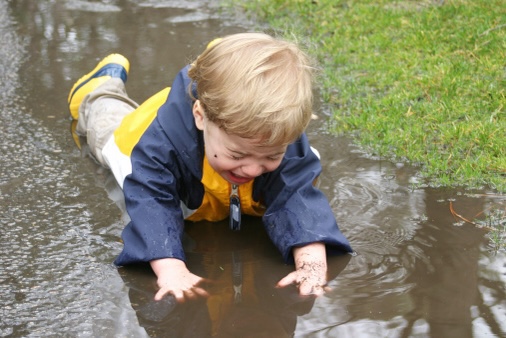
Are they ready to get out of the mud?

Let me give an example of this.  I had coffee and a chat with a close friend about this subject recently.  

“Elizabeth” is a healer and empath with a history of unhealthy relationships beginning in early childhood.  In spite of her history of trauma, she has a beautiful petal-pink heart, and is committed to self-growth and evolution.  She loves to love people, but like many empathy and healers, also has a tendency to give more of herself than she has to give.  As a result, she often draws narcissists and energy vampires because she has difficulty protecting her energy field. 

Imagine a lake of crystal-clear water surrounded by a forest filled with creatures.  Every thirsty animal is going to come to drink from, swim in, and carouse in the lake, right?  Eventually, as we know of African waterholes, the banks become muddy and the water murky and low from so many draining and churning up the water. 

Alternatively, we have a neighboring lake that has a large fence around it with a gate that opens when a thirsty animal or small group of creatures comes over.  The animals learn from the gatekeeper that they are welcome to drink if they are well behaved and drink only what they need.  The lake remains pristine and full, as a result.  

Beautiful, right?  

But Elizabeth has only recently been learning to protect her peace – her lake.  So some unhealthy folks from her past still come around, expecting unlimited energy from her – and get Pissed with a capital P when she protects her boundaries.  They kick and scream, say awful things and accuse her of being a terrible person and not being a “true friend” for not giving them unlimited access to her resources.  

When we spoke of this, she was emotionally torn between knowing that healthy boundaries abOore necessary, and that she can’t “fix” or “save” those that don’t really want to be saved – and feeling guilty for not being a “true friend”.   

But what she wasn’t considering is that true friendship is always a two-sided relationship.  Always.  It doesn’t mean that the way two people express their care is necessarily the same – past programming/experience, love languages and attachment styles rarely if ever cross over completely – but there is always a give and take of energy between both people in any healthy relationship.  In a healthy relationship, both parties should feel filled, at least most of the time.   

Beyond that, it doesn’t matter how much good or potential we see in someone – if they don’t want to do the work to bring out that light in themselves, they will only end up drawing those who try to “help” them further into their darkness.  

So we spoke of Ho’oponopono, and sending love – speaking or thinking of them from a distance – to those people from her past – or present – that did not respect her boundaries or value her caring heart.  

Here’s what I suggested as her Ho’oponopono “prayer” to her old friend:  

~ I am sorry for what you have been through.

~ Please forgive me for whatever pain I may have caused you.

~ Thank you for the wonderful moments of our past.

~ I love you, and wish you happiness. 

This practice allows us to send loving kindness and healing to others – and ourselves – without having to physically engage in potentially exhausting mental and energetic judo with a toxic friend, family member, employer or peer.

Here’s a huge bonus aspect of putting this practice into “meditation” – It helps us build a healthier, happier brain.  

According to Chade-Meng Tan;(@chandemeng ) Nobel Peace Prize nominee (One Billion Acts Of Peace) and author of Joy on Demand, sitting in silence for just three minutes and sending peace, love, or happiness “I wish for ______ to be happy” can drastically improve your own happiness baseline.

I did a little dive into the neurological and neurobiological processes of this phenomena and discovered that not only does this practice increase activity in the prefrontal cortex and create new neural pathways that help us to better self-regulate our emotional responses (NIH PMID 25646442), but it also lowers cortisol levels and increases oxytocin and serotonin. I’d call that a win all the way around, right? 😎

For me, I often incorporate this practice into my morning meditation.  I place my left hand on my heart and my right on my abdomen, breathe slowly and deeply and repeat the prayer or mantra as I visualize someone in my life or from my own past that I would like to send some healing and love to.  

Incidentally, Meditation doesn’t have to be sitting in lotus with a loincloth and a bindi.  I have also practiced this while out on a walk, cooking a meal, or even while creating art.  Anything that puts us into a state of “flow” can be considered meditation.  

(Bearing in mind, there has been significant research on the myriad physiological and neurological benefits of sitting in quiet focus for just 10 minutes each day.  That is a whole blog unto itself (or a book) so we won’t go into details, but something to consider…)

But meditation aside, practicing just a few minutes of Ho’oponopono each day can be a powerful tool for learning to create and honor your own boundaries while still loving others that may not be healthy for us to continue a relationship with. Remember that your energetic resources are finite, and protecting the beauty and purity of your “lake” will not only keep you happier and healthier but will also draw healthier people to you as you move forward on your journey.

How are you learning to protect your energy and your peace? What tools or techniques have been most helpful in setting and keeping healthy boundaries? Is there anything here that especially resonates?

Big love.💖

  • Terah

Perceptions, Presets, and Personal Relationships

The human brain is an organic computer; a recognition machine that every moment is creating stories and constructs to fill in the blanks of the world around us, largely based upon our individual sets of life experiences and preset patterns.

Put into scientific terms, the reticular activating system; the brain’s “reality filter” sorts through the roughly 6,000,000,000 bits of information we take in per second through our primary senses and magnetic field, and translates that information into 4000 or so usable bits of information that we then view the world through. This filter is essentially created through our unique early childhood programming.

This is why confirmation bias happens. Why we so often end up exactly like our parents or caregivers; for better or worse. This is also why learning and incorporating new experiences into our adult lives is so vitally important if we are to continue evolving as individuals and as a species.

But that is a big and multi-faceted subject. For now, let’s look at how it applies to our self-perception and the way that we create relationships with others.

Our relationship with others can only be a reflection of some aspect of the relationship we have with ourselves.

“The world is looking glass and gives back to every man their reflection of his own face.” – William Make-Peace Thackeray

Because of this, It is nearly impossible for any individual to fully understand who another human is. But we can learn to know ourselves better through how we respond and relate to others and the world around us, and in turn broaden our ability to have a greater scope of understanding of who someone is.

When we meet another person, we create an image of them based upon what our own previous life experiences have been. We build assumptions based on our own identity; an identity that is often an egoic construct based on those childhood patterns of survival and “safety”, or lack thereof that we have continued living well into adulthood.

It is estimated that 98% of our thoughts and actions are habitual (and largely based upon this early programming) before we turn 40, unless we are actively working on neuroplasticity – altering that circuitry and growing a better brain.

What we see in the person we are interacting with at any given moment is an amalgamation of recognized aspects of these preset programs and patterns; often having very little to do with who they truly are as an individual.

Unfortunately, in the same way that we often cannot smell our own bad breath, we are usually unaware of the background programs that are controlling our real-time thoughts, words, and behaviors. It is difficult to see our own dysfunctional patterns until something happens that forces us to confront those damaging subconscious belief systems. We can not know that we are in a dark room until someone opens a window and sunlight pours in.

We can only understand another based upon our own identity patterns.

I have seen this pattern in myself plenty of times. I meet someone and I have this “Wow!” moment in which I see their gorgeous inner child or something especially fabulous in their manner; in their incredible potential, and the beauty of their soul, and I fall a little bit in love. Or sometimes a lotta bit.

When I say that we can not truly know another soul for who they are, I am not negating what I see in that person – I know that when I see that beauty and potential, it is absolutely there. But my own preset patterns of recognition don’t always allow me to see all the other aspects of their nature that might not be as compatible with my own. (Reticular Activating System…). What I also don’t always see is how my own dys-functional pre-sets from childhood might be playing into accepting partners or friendships who do not treat me with value.

Often, the recognition of those things I might not see, whether it is in those relationships or in myself, comes months or even years down the road when I have an “aha” moment or realization that I have been accepting sub-par treatment or that the vastly different, difficult, challenging, or impossible aspects of who they are will not change. I have to either accept the whole person rather than the “potential” that I see, or I need to reframe the relationship that I have with that person.

I very recently had one such epiphany; realizing that an unhealthy situation I had gotten myself thoroughly entrenched in was connected to unresolved (unbeknownst to me at the time) patterns that traced back to my very first relationship. This realization hit me like a ton of “holy sh#t” bricks and made my shadow side do a happy dance, feeling significantly lighter for the understanding and letting go of that heaviness.

Haven’t we all experienced this at one time or another?

I really appreciate the Pollyanna aspect of my nature and her ability to want to be besties with the wise, beautiful, Divinely -connected Starseed inner children she sees in others. I like to think that that sparkly, Rainbow-Brite aspect of my nature is my essential nature. The one I was born with, rather than the one that I learned through a complicated childhood.

But that other, darker side; based upon learned behaviors and belief systems from that oftentimes difficult childhood is not nearly as sweet, and has negatively influenced my personal relationships and the way I have viewed the world.

I grew up in a home where there was a tremendous amount of volatility and instability. I could not trust the adults in my life to care for me, protect me, or keep their word to me. Because of this, I learned to be fiercely independent and would not allow myself to trust or be truly vulnerable in my closest relationships. Or if I did, at the first sign of any kind of “betrayal”, I shut down and shut them out. I created self-fulfilling prophecies of being treated with less-than love and value in my closest relationships, based on faulty belief systems. I couldn’t even recognize that they were there or how much they were hurting me until I began to observe myself from the outside.

For me, learning to recognize the patterns of both my inner “Pollyanna” and my darker, less-than-trusting side, and look deeply into my own reactions and behavioral patterns with others has allowed me to cultivate healthier relationships.  As an added bonus, it has also helped me to recognize that humans are complex, and sometimes we fuck up.  I can be okay with those that I love (myself included) being less than perfect, and loving them through their own bullsh#t while maintaining some healthy boundaries for myself, when necessary.   

This is not to say that I am willing to be treated as less than the beautiful soul and gorgeously complex creation that I am, (nor should you) but it does give me a greater ability to have grace for the patterns and presets of those that I choose to surround myself with.

God knows, I am still working on all of this every single day, (#growthmindset) but awareness of my own presets and choosing to see the light in myself, others, and the world around me, rather than the mistrust I was taught, has been huge in altering every single aspect of my life from personal relationships to how I allow myself to see and create reality. 

So if we find ourselves feeling cynical, critical, and judgemental of others, we can learn to recognize that it is our own self-identity that is cynical, critical, and judgemental. We just project onto others what we feel critical of in ourselves.

If we are convinced that humanity is destined for destruction, hell, or just a life half-lived; a life of “settling”; if our view of the world is cynical or fear-based; this is all based upon our own internal belief systems and dialogue.  

But the opposite is also true. If we can learn to see ourselves as essentially good; of being capable of beauty, growth and evolution, we will see that reflected in the people and the world around us. The mind is always listening in on our self-talk, and if we begin to shift the way we speak to and about ourselves, those neurological patterns can begin to reshape themselves, too. I get bonafide nerded out just thinking about how amazing the human brain (and body) is…😉

If we can see the possibility and potential, the magic and miraculously Divine nature of our own beautiful Self,  we will believe others to also be miraculous, magical, Divine beings of infinite potential.  

If this resonates, maybe it’s time to step out of the shadow of a faulty and untrue belief system that was instilled by people who didn’t know a better way, and step into the bright, shiny, fabulously Divine being that you are. Maybe it’s time to unravel from the collective cocoon and way of being taught to us by our parents, society, religion, educational system, and political figures, and start embracing your own unique beauty, capability, and intelligence.

Because that is where your power is, babe. That is where your joy is. Where your magic and freedom and fun are – In the fullness of who you are, and the wisdom of what is right for you.

Through your own awareness, growth, and evolution, your relationships will improve.  You will attract others of a similar mindset who wish the same for themselves.  Through choosing to create your best possible life, and fully loving the Who that you are, you give those around you the permission to do the same. 

Ripples on a pond, babe. 🌊. How cool is that?

Big Love. ✨💖✨

  • Terah 

Into the Chaos

I recently heard an expression – To know your future, look at your present.

This really struck me, and over the next several days, I found myself thinking about all of the ways this is true.  

We can so often gauge the next 5 years of our lives by just looking at how we are getting by right now. For that matter, many of us can look back 10 years and see very little difference between the way we are getting by right now.  

Here’s a statistic that makes me feel especially sad – 95% of people operate from a place of history.   This means that Only 5% of the human population operates from a place of vision and imagination.  From a place of curiosity and growth.

I believe that we are on this planet to learn. To grow. To experience life at its fullest. But how can we be experiencing the fullness of life if we are just repeating the same patterns of 10 years ago?

Where is the adventure, the excitement, the passion in that? Where is the contrast in that?

Sure, it’s true that there is a level of safety and comfort in routine.  In habit.  In the status quo. Change can be frightening and the primitive parts of our brain aren’t hardwired for change.  It is hardwired for safety.  Stay in the cave, stay safe.  Follow the rules, stay safe.  Don’t think for yourself, stay safe.  

We may be able to actively choose the way that we perceive the world, but up to 90% of our daily thoughts are habitual. The human brain is an organic, primitive computer, programmed for survival.  Survival is largely ego-based and the primary objective of this primitive state will always be to seek safety over happiness.  To repeat our history rather than create a dynamic new future.  So the mind keeps us in a feedback loop, re-creating yesterday, the day before, and the day before that.   

Our early childhood programming plays into this, too.  The brain is structured to learn intensely in childhood (2-6 or 7) then hardwire those processes into adulthood. So the Ideas and ideals of our parents and caregivers are passed down through generations, and it is rare that we want to question what is known. 

Mainstream media contributes further to this, hijacking the amygdala (primitive brain) to see the negative or threatening aspects of our reality before we see the good. 

But here’s the thing – if we are not moving or growing for a prolonged period of time, we are stagnant. I know this may feel like a painful truth, but stagnation is just a stone’s throw away from death.

And here’s the crux of this idea – What you do not change, you choose.

I’ll write that again, because it is so, so important.

What you do not change, you choose.  

So the real question becomes; what are you choosing?  Are you choosing to repeat the cycles and programs of your past, or are you redefining your present to create a better future?  Are you allowing the subconscious to rule your emotions and actions based upon patterning that began in childhood?  Are you actively writing your story or allowing someone else’s belief systems to dictate your reality?

Your past does not need to define you.  It does not have to be your future.  

The brain has an amazing ability to re-wire itself (neuroplasticity) through conscious awareness and directed focus to create new neurological programs. This means we must become deeply aware of the direction our thoughts are taking in order to alter the course of our internal dialogue and unconscious bias to change those habits of thinking – to reflect the outer reality that we wish to see rather than the one our past has created. We have to re-evaluate our belief systems to begin laying down new, happier, healthier programs; new ways of being.

This is not necessarily an easy process. Encountering the unfamiliar will always make us feel uncomfortable, and changing those long-held beliefs and hardwired programs will feel frustrating – the amygdala/primitive brain perceives change as a threat and produces stress hormones such as norepinephrine/adrenaline and cortisol to literally make us feel stressed, agitated and frustrated when we try something new.  This chemical release is meant to keep us safe, but it also inhibits our ability to grow.  This process is true of any change we undertake; from learning a new language or skill to healing unhealthy programs from the past. 

 But isn’t changing a life half-lived for a life of conscious creation and happiness worth a little discomfort? 

Rory Vaden, author of “Take the Stairs”, speaks of observing the difference in how buffalo and cows address the frequent storms that come across the mountains of his native state of Colorado.  

Cows, when they sense a storm coming, will turn and run in the opposite direction.  The problem with this is that they often become trapped in the storm, causing distress, injury, and even death – until it blows itself out.  

Buffalo, on the other hand, will wait until the storm crests the mountains, and then charge directly toward the incoming storm.  In this way, they run through the storm rather than getting stuck in it. 

 Our neurological processes can be compared to this.  Most of us just turn tail and run from change, or hunker down and hope the unfamiliar will pass us by.  But here is the super-cool thing about the brain pertaining to our ability to learn and grow – when we choose to go into the chaos/face the “storm” of stress hormones and the feeling of frustration that happens when we begin to examine and address old, outdated ways of thinking, adrenaline becomes acetylcholine; a neurochemical that allows us to go into sustained “focus” mode.  A flow state.  Our curiosity is stimulated.  Acetylcholine allows us to begin to learn new processes and belief systems. When we hold this sustained attention on learning, the brain will “reward” us with a hit of dopamine. 

Just to briefly touch on how this pertains to quantum physics, when we feel good, we draw good to us. We are better able to shape our reality on a quantum level – manipulate particles to create a life of our choosing rather than one of chance and circumstance. 

This also ties into the neurologic phenomenon of “mood follows action”. (“Fake it until you make it”)  We have to step into the storm of frustration that those stress hormones cause in order to move through the chaos and into the feel-good, top-of-the-mountain state of dopamine release.  We have to begin the action of feeling good in order to actually feel good.  When we make a habit of moving into and through the storm, our baseline dopamine levels become higher and the reward we get from learning becomes greater.  

I like to think of this as the “Explorer” phenomenon.  

We travel to a new state to experience a slightly different culture and we get a small hit of dopamine as a reward. We travel to another country such as Ireland or England where the culture is a little different – but still familiar – and we receive a bigger hit of dopamine. We go to rural Africa, India or Indonesia where the culture is vastly different than our previous experience and we have a massive hit of dopamine. I have experienced this myself, many times. I feel more alive when traveling than any other time in large part as a result of this, I am sure.

Just imagine what Magellan, Columbus, Marco Polo or my distant ancestor, Sir Francis Drake; must have experienced upon seeing countries and cultures previously unknown to most of the world must have felt. Wow, right?✨

The neurobiological process of learning and re-programming the mind is just like this. The greater the effort; the bigger the change, the bigger the change, the greater the reward. 🥳

You have the power to create an amazing reality of freedom and joy. I hope that today, you choose to begin shaping that reality into the life of your dreams.

Much love;

  • Terah💖

Self-love, Unbecoming to Become

“The pinnacle of self-love is not ecstasy, it is the heartbreaking process of undoing the life that our unloved self built when we didn’t know better. “

Becoming who we really are begins with learning to love every aspect of our lives – but most importantly, it is learning to love ourselves.  It is an unbecoming of who we were when we didn’t know how to love ourselves.  

It is chaos before order; a difficult and messy unspooling of the heavily bound threads of dysfunction and neglect that we have wound around ourselves, all too often in a cocoon several sizes too small to contain our vast spirit.  But unwind we must before we can step into the fullness of our purpose and truest self; before we can learn to spread our wings and soar. 

Before self-love becomes freedom, it must first be a burden that we carry with minds and hearts just beginning to open to new possibilities.  

We must carry the weight of the anger that we feel towards others for not being treated with the care, love, and respect that we should have asked for all along.  We must carry the weight of anger towards ourselves for what we allowed, often not realizing that there was ever a choice. 

There is the anger for not asking; for not insisting that we were worthy of care and respect. 

For those of us who experienced childhood trauma, this unraveling of emotions is an especially perilous journey, for dragons often lurk in those murky places of our subconscious minds that we fear to tread.  But the journey is a worthy one and the reward of integration with those lost parts of ourselves can not be understated.  

 When we have processed the anger, then comes the heavy grief of time lost – sometimes many years’ worth. 

Eventually, we feel lighter.  We learn to set boundaries and say “No” to those things that are not right for us.  We become deepy accountable to our own self-care and growth; a process that is not an easy one.

At some point, we begin to recognize the truth of the saying that we become the amalgamation of those that we spend the most time with.  And so we learn the painful necessity of cutting away or holding at at careful distance those people and things that have hurt us in the past, or don’t currently serve our highest good.  Sometimes those closest to us decide to grow with us, even if their pace does not match our own.  Sometimes they don’t, and we must make the  difficult decision to allow them to continue their journey on their own, in their own way.  

In the beginning, this can create isolation.  Loneliness.  But as we remove those things in our lives that were creating darkness, light can begin to enter those empty spaces.  Our tribe begins to find us.  We begin to fall in love with not only ourselves, our lives and those souls around us, but we draw in and create close friendships and partnerships that are fulfilling rather than stagnant.  That lift us and allow us to better lift others, in turn. 

We begin to create, or rather, I believe that we learn to consciously collaborate with Source to become the architect of our lives, shaping the fabric of our reality with intention. We learn to see the infinite possibilities within and before us. We find our wings, and begin to soar.

Today and all days, beloved, I want to see you soar. I wish for you the feeling of freedom as you create a life of abundance and beauty. A life of light, and of love.

You deserve it.💖

Much love and big hugs

– Terah