Is there absolute truth in the world?
When it comes to our personal belief systems, I am not so sure there is.
When it comes to taught lessons in much of organized religion, even less so.
This idea might get some of you riled up, but stay with me to the end – I think you might just see some value and understanding as I bring it all together.
Each religion teaches different ideologies; largely accepted and unchallenged “Truths”, such as There is no God but The God…But is God Yahweh, Allah, Shiva, the Demiurge, Zeus, or our own Buddha-nature?
We can speculate and theorize, preach and prosthetize, but ultimately, to say that any one person – or group of people – absolutely knows what “God” is is an extreme form of confirmation bias.
We each come to our own perspective and “belief” based upon our own unique set of experiences and learning. Humans may be at the top of the food chain here on earth, but we are extremely limited in what we can perceive or understand.
We receive an average of 11 million bits of sensory information per second – yet can only process 40-50 bits of that information per second. This overwhelming amount of data is filtered by the Reticular Activating System, the brain’s “Reality Filter”, which largely “shows” us reality through a lens that was created in the programming of the first seven years of our life.
So, for most of us, we are just reiterating, or regurgitating, the belief systems of our parents and caregivers, and their parents and caregivers, going back hundreds of generations.
The religious beliefs of the moment, whether that moment is right now, ancient Greece, or 3000 years ago, change slowly, and only with a massive collective mindshift.
Ra, Isis, Osiris, and others were also Thor, Freya, Loki, and others in the religious beliefs of the Norse, and were also Zeus, Poisedon, Athena, Hera, Apollo, Aphrodite, Artemis and others, who then became Jupiter, Neptune, Pluto, Minerva, Venus, Diana and Apollo, who kept his name when the Romans became the predominant political structure.
But you get the idea, right?
We can see “throughlines” in each culture, including Christianity, where religious culture “borrows” from the one before, but adapts to reflect the appropriate mindset of the time.
This is not to say that I do not personally believe that a higher consciousness or power exists, but my personal interpretation, insofar as my limited human mind can conceive, is that God is the Unified Field; a consciousness that is woven into the fabric of every atom of reality – including those of every human on this planet.
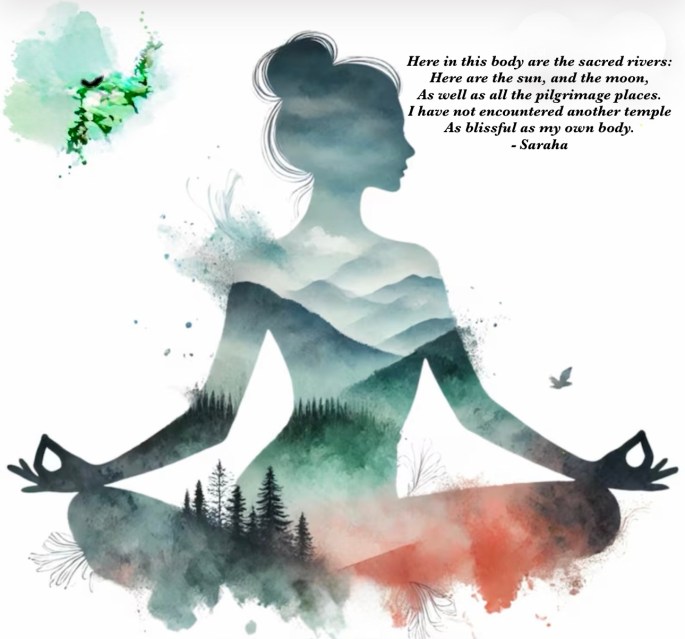
We are all cells in the infinite body of the Divine, having the experience of itself, as a human, or puppy, or plant, here on earth.
Within this framework, I believe there is a place for organized “religion”; a gathering of minds in shared appreciation of our connection to and within this fabric, without the extremes of judgment and dogma that often accompany conventional religion.
We need connection with others, and the reminder that comes through this connection that we are not individual, selfish little avatars rushing through this reality pursuing our own pleasures at the cost of others.
But personally, I do not believe that the only way to God, or Christ consciousness, or Enlightenment, is through one exclusive religion. We all can access the power and wisdom of “God”, whatever God is to us as a collective and individuals, at each and every moment.
Perhaps this is why the apostle Paul said “Rejoice always, pray without ceasing, give thanks in all circumstances.”
Hafiz, a revered Sufi poet who lived in the 14th century, said “What is that sweet voice inside that incites you to fear? Now is the time to know that all you do is sacred.”
Both statements, though in different times and cultures, speak of Divine connection. When we “pray without ceasing”, we are in constant communication with the Source within – and without. If we recognize that this life, and our actions are sacred, we are in alignment with All That Is. We can not be in “sin.”
Which leads to the second topic of this blog. The idea of sin.
If there is no ultimate “Truth”, can there truly be sin?
The Hebrew word for sin is Chatta’ah. It means to “Miss the goal/ mark”. It is to be misaligned with the Sacred.
It does not, exactly, as biblical culture suggests, encompass the litany of evils or “deadly sins” that are found within most religion, from coveting your neighbors’ goat (or wife), going out in public without a headcovering, gossiping, idolatry, unbelief, and what seems like a hundred or so more rules, regulations, and accompanying rites.
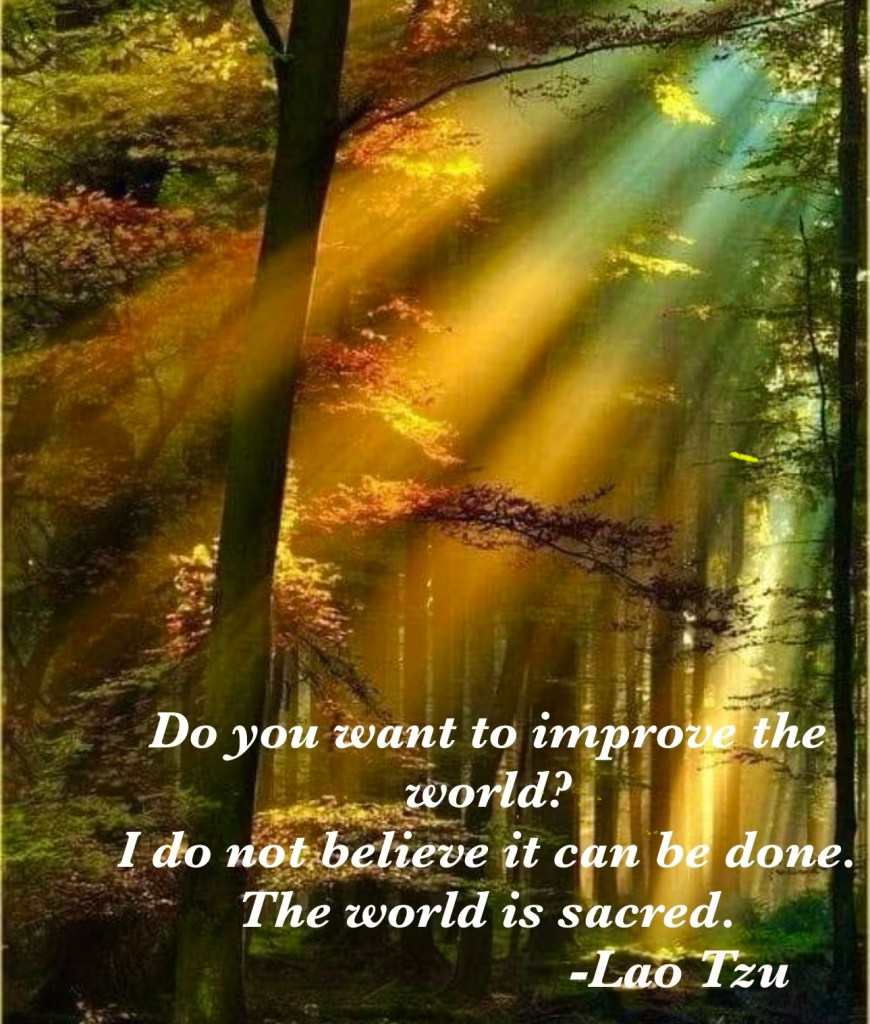
I believe there is only one true “sin” – To believe, or treat the world as, Lao Tzu stated in the Tao Te Ching, as though everything is not sacred.
If “God” is in every particle in the known universe – and beyond – and we “worship” God as holy, does that not mean that everything – everything is, in fact, absolutely precious, beautiful, perfect, and sacred?
If we were to hold anything as an absolute truth, perhaps this would be it. If we love that which is sacred, we must love it all. “Sin” is when we forget this.
The only “sin” is to forget that this life is sacred. To destroy that sacredness; especially that which is innocent.
This is reinforced by biblical scripture – in Matthew 18:6, Christ says “Whoso shall cause one of these little ones (that believe in me) to fall, it would be better for him to have a heavy millstone hung around his neck and to be drowned in the depth of the sea.”
Think about that. If it would be better to be drowned at sea with a stone around your neck than otherwise face the consequences of destroying the innocence of another being, what would the alternative be?
We are in “sin” when we use that which is sacred for our own selfish use and mean – whether that is hurting a child or animal, coveting a neighbor’s goat or wife, or using a holy order such as a ministry or church for personal gain.
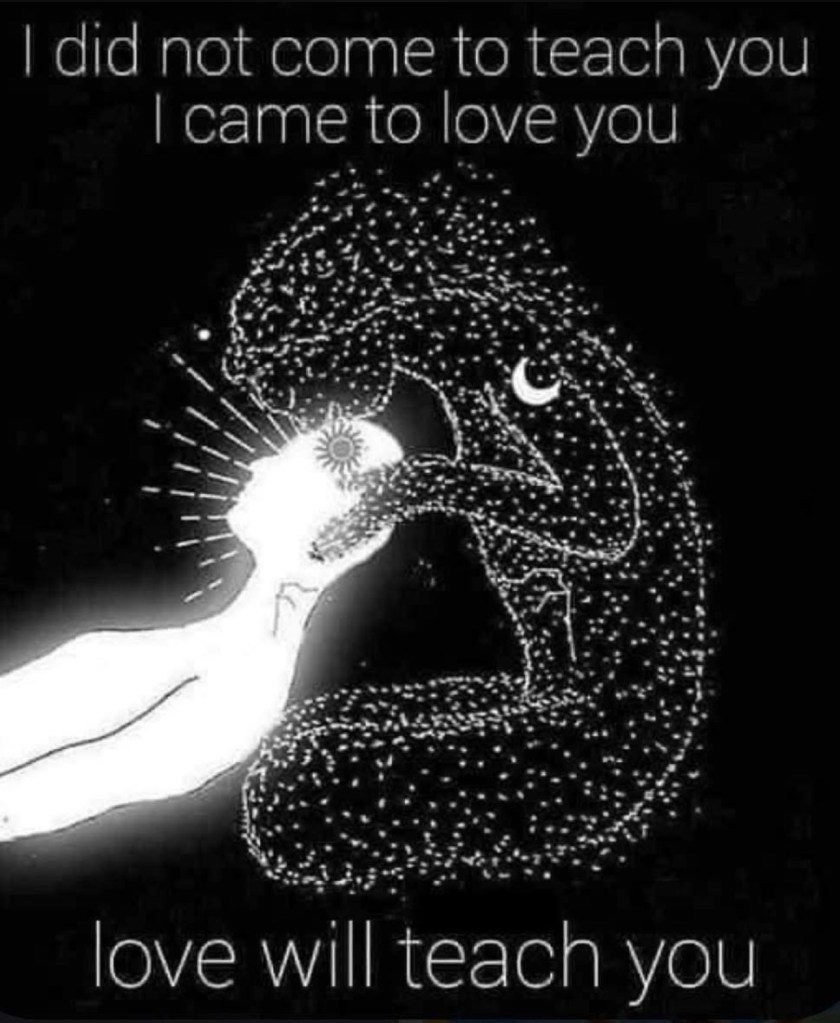
Conversely, if we are in remembrance of the sacredness of life, how can we be anything but love?
If we are living in a state of love, we cannot be controlling, jealous, prideful, envious, gluttonous, wrathful, or in sloth.
When we die, I believe the actions and choices of our life will be weighed – by our own eternal knowledge – not according to the way we “acted” in life, but rather, what the predominant force of our hearts and minds were.
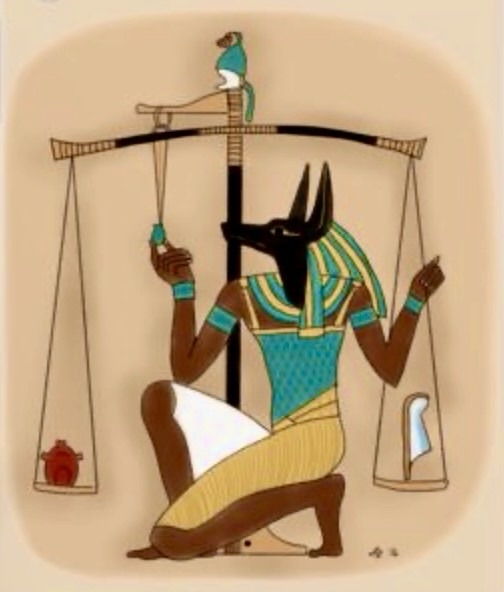
Islam teaches “hell” as a place of fire, boiling water, and suffering. Judaism teaches damnation as nothingness; a complete separation from God. But my belief is that there is no real “hell” at all; that this particular reality is a place for us to learn, and to grow spiritually. If we live from a place of selfishness, we likely are confronted by the “sins” of the life we chose to live, but when our soul takes accountability for these choices, we get to try again, in another life.
I’ve had experiences to suggest I’ve been through this life many, many times before. I’m certainly not perfect in this particular version of me, but I am aware, and that awareness allows me to keep remembering that life is beautiful, sacred, and absolutely perfect – even when it might feel far from it.
This is only my personal perspective, given my own unique set of life experiences. I can not speak for – or judge – anyone else’s personal way of seeing, being, or navigating this particular version of time-space reality.
But perhaps, if you are in a space where conventional religion has been failing you, this might give you something to think about.
Big love.💖
- Terah

