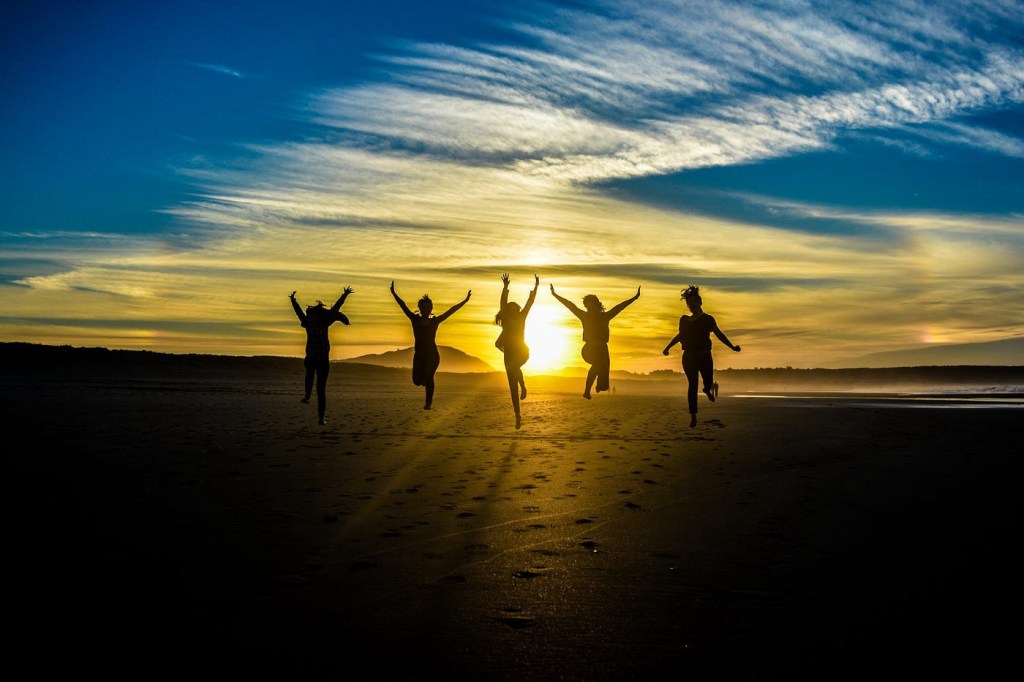
Connection

Better, together.💞

I had a dream last night that a sorcerer bound myself and two of my friends together with black string, with a few feet of length between each of us.

We attempted to cut the string, but each time we tried,  it became stronger and thicker, until it was a tightly coiled black rope that no one knew how to cut or unbind.   

We were told that there was another sorcerer in a distant land who should be able to help us, and we set out to find him, having many adventures – both challenging and fun, along the way.  On our journey, we learned to cooperate and collaborate well, and to navigate together successfully.  The thing I remember most about the feeling of this experience within the dream is the humor that we all shared at our situation, and by the time we did finally find that other sorcerer, it no longer felt like a frustration to be bound together.  

But we had come to have those ties unwound, and the sorcerer easily dissolved the ropes.  At first, we were all overjoyed to finally have our freedom and set off in three completely opposite directions to re-find our individual paths. 

But it didn’t take very long to realize that once we had become accustomed to the challenges of being so closely tied, we had all been so much happier, together. I felt a tremendous sense of sadness and loss, and I began walking back to the crossroads that we all had parted from, hoping my “family” would also be moving back that direction to find a path that we could walk together.  I awoke, still experiencing a little of that grief.  

In the Yogic tradition, we are taught that we all have invisible lines of energy called Nadis that connect us to Source, each other, and the Universe at large.  Those lines that connect us to our most loved ones are like the thick cords of my dream, but we have many etheric connections to those around us.  They are there because we need connection to others.  These cords can provide information, give and receive energy and to those trained to recognize and move energy, even heal.

But these cords can also be used to harm, siphoning energy or life force from those around or conversely, draining ourselves dry as we give too much of ourselves to others, if we are not emotionally healthy.  

The pain from this can cause us to isolate; to draw away from everyone out of our hurt and pain.  As we create this distance, we also loosen those ties and the connections we have to others, often leaving us feeling empty and alone.  I believe our addiction to technology ironically emphasizes this.  We are more connected and also disconnected than ever before – perhaps a large reason for the dramatic uptick in depression, suicidal ideation and most tragically, unaliving – a rarity until the last decade or so.  

I think the dream was a reminder that we need those cords.  It is a reminder that even when we are annoyed or frustrated with our loved ones, when we communicate, cooperate, collaborate and find healthy ways to compromise to work together, we will always be happier journeying together than when we isolate or think that we always have to walk our paths alone.  

Connection without codependency


This is not to say that codependency is a healthy thing.  If we feel that we need another human in our life to feel fulfilled – If we can’t be content or at peace when we are alone with ourselves, it is probably because there is some aspect of our internal self that we are avoiding out of fear or dislike.  There will also be times when we really do need to spend some time on our journey with ourselves – to heal, to figure out something important or just to learn to truly like and feel complete and comfortable in our own company.  

But big picture, we need those cords that keep us connected to others.  We need to be loved, and to love.  We need to share laughter, tears, ideas, adventures and experiences with other souls – our families, our friendships (framily) romantic partners, or our communities.  Ideally, a combination of all of these, and maybe even a furry companion or two (or four, for some of us
👀👀)

This need for connection and collaboration is  true on a larger scale, as well. Democrats versus Republicans, men versus women, white versus
 every other race
you get the picture.  

It’s all fear-based indoctrination and intentional segregation/separation.  But this division is not truth.  We are all a unique amalgamation of past experiences and patterns that lead us to whatever ideology we happen to be holding right right now. But if we are at the extreme of one place or another, we are in separation and lacking the balance that being able to see two sides of what is often the same coin can bring.  
 If we allowed ourselves the ability to step outside of our egos and identification to recognize the fact that underneath our ideological programs, we are all just humans, trying our best to figure things out on this big, beautiful planet.  

Wouldn’t it be better if we had the gift of many different mindsets to learn and grow from?  Not to mention, if we made all of the folks out there that we labeled as “other” or even “enemy” into friends on our journey, what an amazing, big beautiful party this life could become.

Something to think about.😎

Big love💖
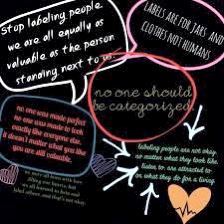
Label Less, Love More.

We are all narcissists, to varying degrees.

I  know this goes against current popular opinion which loves to vilify anyone they view as self-centered, but hear me out. 

I had an unexpected experience today that left me feeling quite sad.  It is not because anything awful has happened; really, just the opposite. I have had a particular abundance of blessings in my life recently.  As  a result, I try to share a little extra of that abundance whenever I see or feel someone in need.  

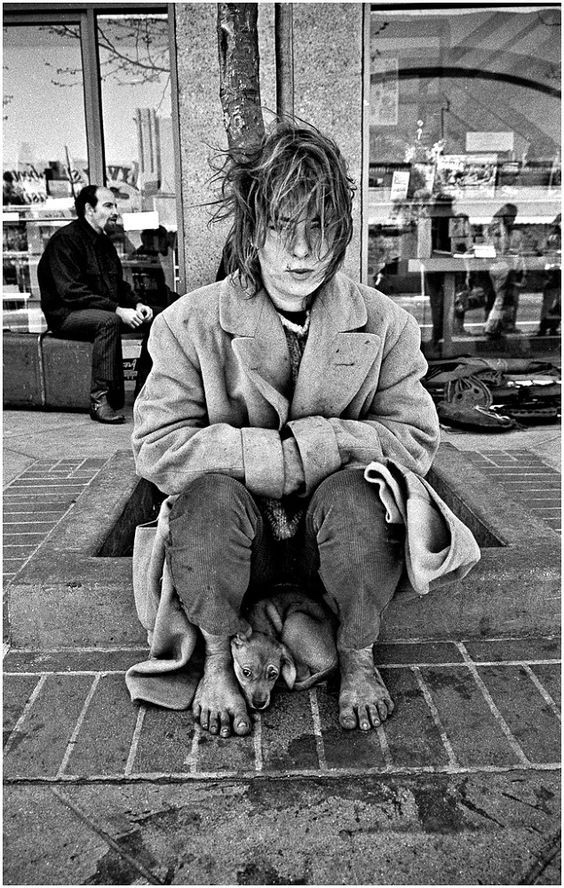
Today was one of those days. I had been doing some shopping at Safeway in Lynden. A man passed me in the produce area, and at first, I didn’t see him so much as I felt him. I felt a sense of darkness that was connected to a deep sadness. I glanced up to see where those frequencies were coming from, and saw a young man passing me, walking away, maybe four feet past. He was dressed all in dark colors, his clothes shabby and his shoes falling apart. He held himself like somebody who has experienced deep pain; his shoulders hunched and head down, hood drawn deeply over his face though it was a gloriously sunny afternoon.

{ This is not the person that I had this experience with.  Just an illustration. }

It’s rare to see someone so broken in the tiny NW Washington hamlet Lynden. I don’t necessarily think that the town has any less dysfunction than anywhere else – I just think that the powers that be tend to make sure that anyone with extreme outward signs of mental disorders, addictions or emotional trauma is either well hidden or
 elsewhere.

Please note that I am not in any way disparaging the town. I lived there for several years, raised my children there, and owned a business. I made many happy memories there and still have a large part of my most loved community in the area.  I love how clean and safe it feels. 

But in order to create that sense of cleanliness and safety, there is just not going to be outward evidence of anything that does not support that feeling.

If I want my flower beds to look their best, I’m going to pull the weeds, right?  

The problem is, sometimes it can be easy to forget that most weeds have just as much value and often greater medicinal properties than the flowers do because they don’t look as pretty.

But back to the man at Safeway. 

I felt such a deep sense of sadness as he walked away.   I don’t think that drugs were the issue, but there was definitely some mental illness.  I have often wondered how someone becomes so very broken – what  child ever decided that they wanted to be homeless when they grew up? I don’t think this man could have been more than mid 20s so childhood wasn’t that far away.😣

I wished that I could do something to help him in that moment – but it was pretty clear that he did not want to be approached. 

But I had an opportunity to try to help a little later when I got up to the register. 

He had finished his shopping just before me, and was at the register directly across from where I checked out, digging through his pockets; ones spread out on the counter as he searched  for coins to pay for the last of his groceries.  The cashier looked on in impatience and low-grade disgust.  (We do love our petty judgements, don’t we?đŸ«€).  I happened to have a $100 bill in my wallet, so I walked over, handed the cashier the money, and said “I would like to help“ and then walked back to my register to continue to check out.  

My heart felt a little bit happier, knowing that maybe I might have made some small difference in this man’s day.  

He did not look up at all, and left shortly there after. I finished my own checkout and walked past the register where he had been.   The cashier stopped me to hand me my money back. He said the man would not accept it. 

Honestly, I was a little bit crushed. I know this probably sounds strange, but when I experience either happiness or sadness, I often feel it as a physical sensation in my heart center. When I am happy, my heart feels buoyant. Sparkly.✹. But at that moment, I felt my heart drop and compress a little. The heaviness there doesn’t feel good.

His shoes had been barely held together and he obviously did not have enough to pay for his groceries, so why wouldn’t he let me help? I didn’t understand, but as I walked out to my truck, I saw him walking quickly across the parking lot, carrying his one bag of groceries; head down as before, but clearly swiping at his eyes with his free hand.  I am certain that he was crying. 

I think maybe he was just so sad to be in that position, but  still had enough pride that he didn’t want to accept help from a random stranger.

I found myself weeping, too. Honestly, I’m still in tears and my heart heavy, an hour later, thinking about it.

And here’s where the idea of narcissism comes in. Each of us exist in our own private little universe. We can only truly understand or relate to that which we have personally experienced in some way. We have others in our life who we care for, of course, and those who care for us, as well. Most of us generally wish well for others and I believe want the best for those around us in the world at large.

But how much of that is self-centered? How much of our desire to “save the world“ or care for others comes from a place of wanting to live in the best world that we can as individuals, or be cared for by others?  Just look at the rampant hate that has happened in the last few years.  We often don’t even try to understand other people’s perspectives. We just hate because they are different. 

Because they are “other“.

There are 1000 different ways this manifests (racism, sexisx, ageism, political polarization
the list goes on), but all of us have experienced it one way or another.

When I help someone who is in need, usually, it is because I am deeply empathetic, and I literally feel other people’s pain as my own. It is also easy for me to put myself in another’s shoes and imagine how it might feel to be them. I help people because I want to help, but I also help people because I don’t want to be in pain. Does that make sense?

I’m not saying that there isn’t altruism involved with me or anyone else. Of course there is. But it is also true that some of the source of that altruism is really selfishness – what many right now like to label as narcissism .  

I’m also not saying that there are not people in the world who are genuinely narcissistic. I have known some who just lacked empathy so profoundly that nothing existed besides themselves, unless it was someone or some thing that was there because they served a purpose.

But actual, pathological narcissism is estimated to be less than 1% of the population. So the hundreds of thousands who are on the “pin the tail on the narcissist” bandwagon are spearing a whole lot of innocent bystanders


We have become so accustomed to throwing around labels such as “narcissist”, “snowflake”, “boomer”, “Karen” or “Chad” that it feels to me that we have lost much of our ability to be compassionate towards others, and the “education” we receive (largely on social media) in understanding psychological behavior has swung so far to one side that we are hurting more than we are helping.

 And I guess that is the purpose of this particular blog, though it is made in a roundabout way.  

If my desire to help others comes at least in part because I want to alleviate the emotional and physical pain that I  experience as a result of another’s suffering, does that make me a narcissist? 

 According to many folks’ definition of the term right now, I believe it would.  And perhaps I am, to a degree; though my guess is that most who know me would say the opposite to be true. 

But my point is that maybe, rather than being so quick to judge or label another, perhaps we might take a step back and try to ask where that judgment might be coming from, and recognize some aspect of it in ourselves. 

Or, at least, try to understand and have compassion for another’s experience and perspective. We all know the old adage “judge not, lest ye also be judged”, but I think a more appropriate version might be “Judge not, for when we judge another, we are really just judging something we recognize within ourselves.”  

We are all stars reflecting each others’ light, and like the stars that light up the night sky, we are all beautiful, bright and shiny – in our own way. And also like the stars, we hold the power to warm – or to burn – those around us.

This beauty, warmth, and capacity for destruction is true for everyone, and everyone is deserving of compassion, value, and care.

Even the homeless person that we avoid downtown – who is likely there because past trauma has broken their spirit.

Even the Karen throwing a tantrum at the cafe – likely because her inner child just wants to be heard.  

Even the Chad that acts like a dick as an adult because he was bullied as a child.  

Even the “Trump supporter”, looking for a better America.  

Even the Biden supporter, also looking for a better America.  

Even the neurodivergent, just trying to get by in a word of “normies”. 

Even the gender-alternative. 

Even the person of another race or color.

Even the addict.  

And all the other Evens and Odds out there that make this world an infinitely interesting and varied place – and thank God for that, right? 😎

Loved one, I hope that wherever you are reading this from, you are safe, and happy.  I hope that your life is filled with love and blessings. 

And I also hope that the next time you find yourself beginning to label someone in a way that negates all of who they are, you pause for a moment, and send love instead of negativity.  I hope you can see that perhaps who they are reflects a little of who You are, and you are able to love yourself a little more for that understanding.  

And if you are able to share a little bit of that love, or some of your own abundance, you just might make someone’s life a little bit better, their day a little bit brighter, and do some good for yourself, all at the same time.đŸ„°

Big love.💖

  • Terah

Judgement

Hold my coffee because I need to jump up onto my soapbox to rant for a minute. 😑

Well, maybe more than a minute, because this is an encompassing subject that affects every single aspect of who we are and the world around us.

I’m referring to judgment and limiting beliefs systems – and how damaging it is to us as individuals, and society at large. It stunts out growth and limits our possibility.

Saturday, I went to a local casino with friends. I’m not really a gambler and rarely go to casinos. The energy makes me feel sad. But a few of my friends go somewhat regularly, and I thought it might be a good opportunity for me to see the experience from a different perspective. The first little bit was fun, although we all lost money. Half an hour in or so, some other friends joined us.

They had been there less than 10 minutes, had not been drinking and hadn’t had a chance to get a drink yet, but one of these friends  has a very boisterous personality.   The floor manager, along with a couple of the security came over to ask her to leave. 

They thought she was drunk and told her that she could not order any more drinks or gamble. Needless to say, I was shocked and confused. She hadn’t had a drink yet, so how could she be cut off from ordering more? 

I was sitting right next to her at a line of slot games to watch her technique, and although she didn’t behave like most of the other people in the casino, who seemed to me a little bit like depressed zombies as they lost their financial security to slot machines or tables rigged for the house to win, she was not in any way being unruly or extreme in her behavior. 

But her personality apparently did not fit into the accepted order, so she was kicked out. 

It’s interesting how things are brought to us in multiples, isn’t it?

The very next morning, one of my very good friends called me in tears because something similar happened to her at church.  

Apparently, she was too enthusiastic in her worship of God during the music and when the pastor would say “Can I get an Amen?”.  

As she was leaving, two men took her side to tell her that while they appreciated her spirit, could she please take her joy and enthusiasm down from a 10 to 5 or six?  Because “God“ likes us to be quiet and obedient, right?

We humans really love to put things in boxes; tiny little hidey – holes where we need things to fit in order to feel safe in the world around us.  

We put the idea of “God“ in a box that looks just enough like us in to feel safe, but enough different to feel like something we can rely on.

We judge each other and ourselves by our skin color, sex, personality, career choices, how much money we make, by the homes that we live in, our social status, age, looks, diet, exercise regimen, and 100 other things in this quest to create familiarity with every aspect of our existence. Because that which we don’t know or understand is often frightening.

But what is the old expression?   “Familiarity breeds contempt”

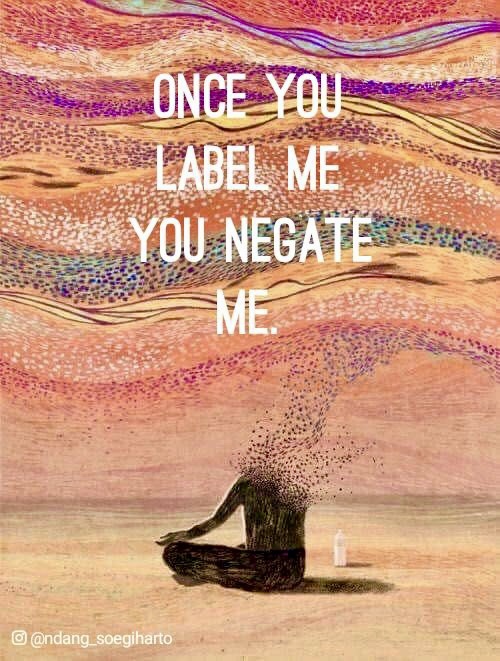
Or how about “When you label me, you negate me.”

We take the mystery and magic out of those people and things around us; we label, judge, and make smaller everything and everyone; ourselves included, and then we wonder why we have a habit of feeling deeply unhappy.  

We wonder why the rate of depression in the United States is estimated to be hovering around 46%, yet continue to hold to societal norms that were relevant or to our primitive ancestors in a time when a certain amount of assimilation was necessary for the safety and continuation of our species.

 I believe we are seeing such a tremendous uptick in neural divergence because we are living in a time when we are meant to evolve beyond our past limited ways of thinking.  We are meant to evolve beyond the fear that keeps us bound and shackled to a system that hasn’t worked well for a long time.  

Honestly, sometimes it is enough to make me weep – or pull my hair out. Or a combination of the two.

This frustration stems from the understanding that when we make small the world around us, we shrink proportionally. When we judge others, we also judge ourselves as lacking in some way.  We judge out of fear, out of lack, out of hatred.  There is no room for love in judgement. 

When  it comes right down to it, we are each living in a microcosm of our own making. 

We can only see reality based upon our minds’  acceptance of what is real and what is not. What is acceptable and what is not.   What our past experience and neurological programming deems appropriate.  This is why critical, judging, and destructive behaviors are often passed from generation to generation. 

Our programming begins with our parents or caregivers in childhood and continues throughout our lives, but the Reticular Activating System; the mind’s sensory filtration system, located in  a part of the “primitive brain” called the amygdala, will only allow us to “see” that which is acceptable or appropriate; largely based upon our past experience and preconceived ideas and notions.

 If our parents and those around us told us that the Earth was flat, well, of course, the earth must be flat and anybody that believes otherwise must be crazy.

But then, at some point, we learn that the Earth is in fact, round – and it is those that believe it is flat  that are crazy.

Do you see my point here? Truth is subjective and relative only to what we have created in our minds.

  • “Of course, there are different truths on different levels. Things are true relative to other things; “long” and “short” relate to each other, “high” and “low,” and so on. But is there any absolute truth? Something self-sufficient, independently true in itself? I don’t think so.
  • Dalai Lama

Let me make this a little bit personal with some examples from my own life.   

For those that know me, I look younger than what society says I should based upon how many trips around the sun I have had. I believe a large portion of this is because I do not agree or subscribe to whatever it is that “age” is supposed to be.

This has been true for my entire adult life.

 It was rare that older  “adults” who didn’t know me saw my value as a human being because of the way I looked.  Instead, they saw a “pretty young thing“ who was fun to look at, but the idea of me being intelligent and intuitive was not in the realm of possibility.

A poignant illustration of this was a night when I was at a party with my then fiancé’s parents, his brother and sister, and their spouses. 

I was 20 at the time.  My fiancĂ©es brother’s wife was in her early 30s and had recently gotten her doctorate. When a group of family friends approached us, I was introduced as the “sweet, beautiful“ daughter and Layla was introduced as the “smart” daughter.  Never mind that Layla was quite pretty, and I am quite intelligent; the Who that we were was instantly not only degraded, but negated to everyone in that group.  

Even now, I find myself judged as a result of my appearance.  In a group of people older than me I am the “baby”, but to those  in their 20s and 30s, I am a peer –  until my wisdom and experience  gives me away, and then I become the “mother“ or the “MILF” instead of just another soul enjoying a human experience of fun and connection.  

I become the flat earth, because of what they have been taught and continue to believe.

For much of my young adulthood, I exclusively had relationships with men significantly older.  

Then I met my ex husband, who was nearly eight years younger.  My past programming said “no effing way” to anything beyond friendship, but when, a month or so into spending time together, I realized that I quite enjoyed him as a person with a beautiful soul, I questioned my own doctrine.  I didn’t “see” the age difference in a man twenty years my senior, so why did I judge someone who was younger?

Because of the way I judged myself.  

This realization allowed me to open to the possibility of more, and friendship led to dating and eventual marriage.  We stayed together for 15 years, and I don’t think it ever occurred to either of us to think about the difference in our age.  Most people assumed I was younger than him.  

I, like most of us, have experienced the way people judge in every possible form. I have been stopped on the road by a police officer when I was out walking with a good friend, who happened to be an African-American male. The Officer wanted to make sure I was “safe“.  Because I was a white female out walking with a black man.  Wtf?

One of my best friends happens to be gay. I have known him since childhood, and knew he was gay before he did.  In my mind, it was no different than the fact that he has a mole on his left cheekbone or the way his heart feels, but society says that instead of being a perfect and beautiful soul, he is a “sinner”.  He’s bad.  Wrong. 

 F#ck that shite.  How dare any of us judge what makes someone else happy?  

I know that every single person reading this can relate in some way, whether it is feeling judged because of your career choices, your race, your looks, your age, your gender, your sexual preference or any of the other physical, emotional, or intellectual aspects of who you are as a person. 

 We judge who we will connect with based upon race, religion, age, sexual identity or a hundred other petty assumptions based upon personal “truths” that are not only subjective but likely completely untrue, but we limit the degree to which we live our lives as a result.  

So let’s just agree to stop.  Stop judging each other.  Stop judging ourselves.  Recognize that we are all souls having this very individual human experience, yet also connected.  And that is a beautiful thing.  

Much love and big hugs, always. 

  • Terah💖